The global architecture and construction industries stand at a crossroads. For decades, the prevailing narrative celebrated grandiosity soaring skyscrapers, sprawling urban developments, and the relentless consumption of raw materials. However, a seismic shift is underway. The movement known as “Architects Declare” has sparked a critical conversation, challenging the profession to abandon the “Fantasy of Less.” This phrase does not imply a reduction in creativity or ambition; rather, it dismantles the illusion that minor efficiency tweaks are sufficient to combat the climate crisis. This article explores the origins of Architects Declare, deconstructs the “Fantasy of Less,” and presents a comprehensive roadmap for genuine, regenerative architectural practice.
The Genesis of Architects Declare
In 2019, a group of leading architecture practices in the United Kingdom came together to sign a landmark declaration. This document acknowledged the twin crises of climate breakdown and biodiversity loss. It was a direct response to the construction industry’s massive carbon footprint accounting for nearly 40% of global energy-related CO2 emissions. The signatories committed to moving beyond empty rhetoric and toward tangible change.
The declaration quickly transcended borders. Today, Architects Declare is a global network of professionals who recognize that business-as-usual is no longer viable. They advocate for a shift from a linear economy take, make, waste to a circular model. While the sentiment is noble, the movement has also faced scrutiny. Critics argue that many firms use the declaration as a greenwashing tool, signing the pledge while continuing to design carbon-intensive projects. This paradox brings us to the heart of the issue: the “Fantasy of Less.”
Deconstructing the “Fantasy of Less”
The term “Fantasy of Less” describes the architectural industry’s tendency to rely on incremental sustainability measures. It is the belief that slightly reducing energy consumption, adding a green roof, or specifying recycled carpet tiles constitutes a sufficient response to the ecological emergency. This fantasy is dangerous because it creates a placebo effect making architects and clients feel virtuous while the structural drivers of environmental destruction remain untouched.
The Illusion of Efficiency
Efficiency is often mistaken for sufficiency. A building can be highly energy-efficient yet still contribute to climate change if its construction required immense amounts of virgin steel and concrete. The fantasy ignores embodied carbon—the emissions generated during the extraction, manufacturing, and transportation of materials. While operational carbon has been regulated for years, embodied carbon remains the blind spot of the industry.
The Myth of Technological Salvation
Another layer of the fantasy is the over-reliance on future technology. Architects sometimes justify excessive consumption today by betting on unproven carbon capture systems or speculative green materials. This “tech optimism” delays necessary, immediate changes to how we design and build.
The Growth Paradox
Architects Declare highlights a fundamental conflict: the architectural profession is intrinsically tied to economic growth. Most practices rely on continuous construction to survive. The fantasy suggests that we can have infinite growth on a finite planet. Until this paradox is addressed, sustainability remains a stylistic choice rather than an ethical foundation.
Beyond the Fantasy: Principles of Regenerative Design
To move past the fantasy, architects must adopt a regenerative mindset. Regeneration goes beyond “doing less harm”; it actively repairs ecosystems and communities. This requires a complete overhaul of design philosophy, procurement, and construction methodologies.
A. Prioritizing Retrofit Over New Build
The most sustainable building is the one that already exists. Demolition is an act of environmental violence, sending thousands of tons of material to landfill. Architects must champion adaptive reuse and deep retrofitting. By upgrading insulation, replacing fossil-fuel heating systems, and reconfiguring layouts for modern needs, we extend the life of existing structures.
Benefits of Retrofit:
-
Carbon Conservation: Preserves the embodied carbon already invested in the building.
-
Cultural Continuity: Maintains the historical narrative and character of neighborhoods.
-
Waste Reduction: Significantly cuts down construction and demolition debris.
B. Biophilic and Bio-Based Materials
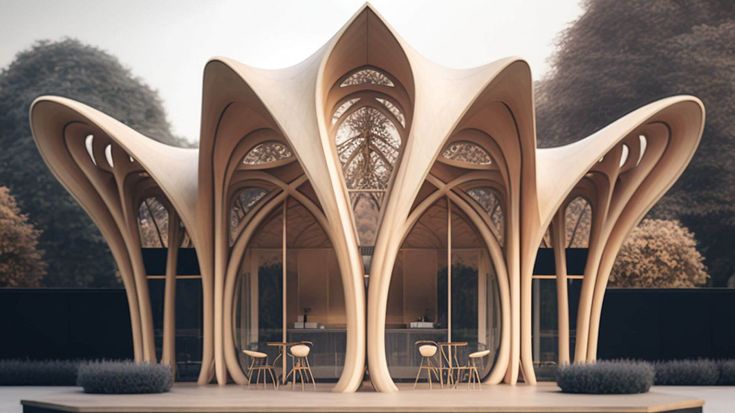
The specification of materials is a political act. Architects must move away from high-carbon concrete and steel toward bio-based alternatives. Timber, straw bale, hempcrete, and mycelium composites are not only renewable but also sequester carbon during their growth phase.
Material Selection Criteria:
-
Renewability: Is the material harvested at a rate equal to or less than its regeneration?
-
Local Sourcing: Can it be obtained within a 100-mile radius to reduce transport emissions?
-
Toxicity: Does it off-gas volatile organic compounds (VOCs) or contribute to indoor air pollution?
-
End of Life: Can it be composted or easily disassembled for reuse?
C. Designing for Disassembly and Circularity
Linear buildings become waste. Circular buildings become material banks. Architects must design with the end in mind, utilizing mechanical fixings rather than chemical adhesives to allow for easy deconstruction. Every component should be tagged for future reuse.
Strategies for Circular Design:
-
Modularity: Standardized dimensions allow components to be swapped and reused across different projects.
-
Transparency: Digital material passports documenting the provenance and properties of building elements.
-
Leasing Models: Manufacturers retain ownership of materials (e.g., carpet tiles, lighting fixtures) and reclaim them at end-of-life.
D. Passive House and Bioclimatic Strategies
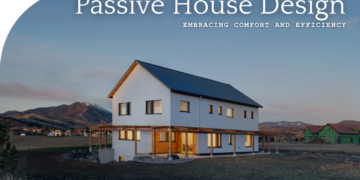
While efficiency alone is insufficient, it remains a crucial component. The Passive House standard represents the pinnacle of energy-efficient design, drastically reducing heating and cooling loads through super-insulation, airtightness, and heat recovery ventilation.
Bioclimatic design goes further by responding to the specific climate of the site. This includes orienting buildings to maximize solar gain in winter and minimize it in summer, utilizing thermal mass, and integrating natural ventilation.
E. Re-Wilding the Urban Fabric
Architects have a responsibility beyond the building envelope. Landscape and biodiversity must be integrated from the earliest sketches. Green roofs, rain gardens, and permeable pavements manage stormwater while providing habitat corridors for pollinators.
Ecological Interventions:
-
Native Planting: Reduces water demand and supports local fauna.
-
Food Production: Incorporating edible landscapes and community gardens.
-
Dark Sky Compliance: Reducing light pollution to protect nocturnal wildlife.
The Role of Policy and Education
Individual architectural gestures are meaningful, but systemic change requires top-down intervention. Governments must legislate to make sustainable design the default, not the exception.
Policy Recommendations
A. Embodied Carbon Regulation: Building codes must set maximum limits on embodied carbon, similar to operational energy targets. Mandatory life-cycle assessments (LCAs) should be required for planning permission.
B. Taxing Virgin Materials: Impose levies on primary aggregates and virgin plastics to make recycled content financially competitive.
C. Retrofit First Policies: Local authorities should incentivize renovation over demolition through fast-tracked permits and grants.
D. Procurement Reform: Public projects should mandate circular economy principles and reward social value over lowest cost.
Educational Reform
Architecture schools have historically glorified the “starchitect” the individual genius who imposes their vision upon the world. This model is obsolete. Future curricula must emphasize:
-
Interdisciplinary Collaboration: Working with ecologists, engineers, and sociologists.
-
Hands-On Material Science: Understanding the physical properties and carbon impact of materials.
-
Ethics and Advocacy: Teaching students to be activists who challenge unsustainable briefs.
Case Studies: Moving from Fantasy to Reality
To illustrate these principles, we can examine projects that successfully navigate beyond the fantasy.
The Velux Living Places, Copenhagen
This project demonstrates that high-quality, healthy housing does not require excessive carbon. Using timber construction and optimized daylighting, the scheme achieves a net-positive impact on occupant well-being while maintaining a radically low carbon footprint. The design is open-source, encouraging replication.
Park 20|20, The Netherlands
Developed by William McDonough, this business park is a testament to cradle-to-cradle design. Every material is assessed for biological or technical nutrient cycles. Buildings are designed for disassembly, and water is managed on-site. It proves that circular economy principles are commercially viable.
The Phoenix, Lewes, UK
Instead of demolishing a 20th-century brewery, architects converted it into a mixed-use community hub. The project retained 75% of the existing structure, saving approximately 1,000 tons of CO2. It integrates Passivhaus elements and utilizes timber extensions, demonstrating the power of retrofit.
The Architect as Activist
Architects can no longer afford to be neutral service providers. The clients commissioning carbon-intensive projects—luxury towers, private jets hangars, fossil fuel headquarters—must be refused. Several Architects Declare signatories have already taken this stand, publicly declining work that contradicts the declaration’s ethos.
This stance requires financial courage. Small practices worry that turning down work will lead to insolvency. However, there is a growing market for ethical design. Clients are emerging who value long-term resilience over short-term spectacle. By pivoting toward retrofit, community-led housing, and biophilic design, architects can build a viable economy rooted in regeneration.
The Cultural Shift: Storytelling and Communication
One of the most potent tools in the architect’s arsenal is storytelling. The public often associates sustainable design with compromise leaky eco-homes or bland utilitarian boxes. Architects must articulate a new vision of beauty that is entwined with ecological health.
A New Aesthetic
This aesthetic is not about austerity. It celebrates patina, reuse, and the honest expression of materials. A wall of reclaimed brick carries a history that a pristine factory-made surface lacks. A timber column that varies in grain tells a story of the forest it came from.
Visualizing Impact
Clients respond to data, but they also respond to narrative. Architects must become fluent in translating carbon metrics into human terms. “This retrofit saved the equivalent carbon of planting 5,000 trees” is more compelling than a spreadsheet of kilowatt-hours. Visualization tools can project the future biodiversity of a site, showing how a building will knit itself into the landscape over decades.
Conclusion: Dispelling the Fantasy

The “Fantasy of Less” is a seductive illusion. It allows the architecture profession to believe it is solving the climate crisis while fundamentally perpetuating it. Architects Declare was a necessary intervention, but it is merely the opening chapter. To write the rest of the story, the industry must embrace radical transparency, reject carbon-intensive commissions, and elevate regenerative design from a niche specialization to the universal standard.
This transition is not merely technical; it is philosophical. It asks architects to redefine success. A successful building is no longer the one photographed for glossy magazines, isolated against a blue sky. It is the building that sequesters carbon, nurtures biodiversity, fosters community, and enriches the soil long after its occupants have moved on.
The path beyond the fantasy is arduous, but it is also exhilarating. It frees architects from the tyranny of novelty and invites them to become stewards of the planet. By embracing this responsibility, we do not sacrifice architecture we elevate it to its highest calling.