The interior design world is witnessing a profound transformation. For the past decade, the pendulum of style has been firmly fixed on the Scandi-inspired aesthetic a world of white walls, pale oak, beechwood, and the stark, “instagrammable” cleanliness of the minimalist farmhouse. However, as we move further into the mid-2020s, the data and the designs speak for themselves: the era of “cold minimalism” is receding, replaced by a craving for warmth, narrative, and authenticity .
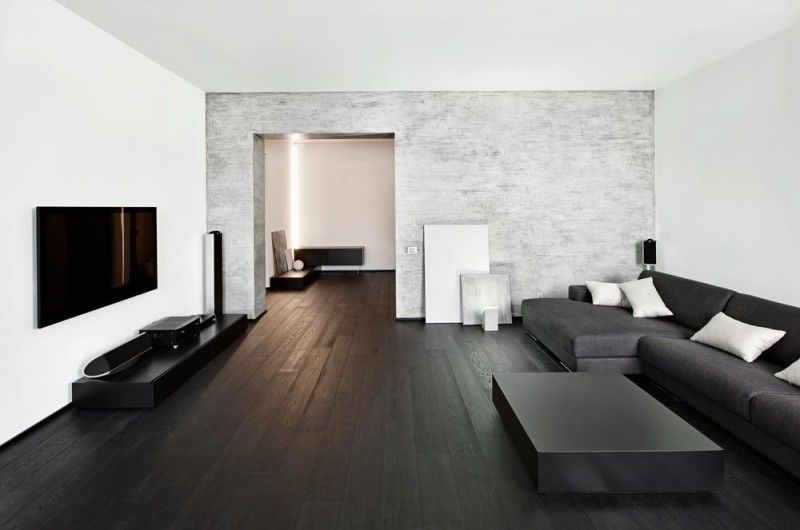
Leading this charge is the Dark Wood Revival in Minimalism. This might sound like an oxymoron. After all, minimalism is typically associated with light, airy spaces and sparse furnishings, while dark wood conjures images of Victorian parlors heavy with ornamentation. Yet, today’s leading designers are proving that dark wood is not just compatible with minimalism it is the key to saving it from becoming sterile. This article explores how deep-toned mahogany, walnut, and ebonized oak are being stripped of their ornate Victorian past and refined into sculptural, functional art pieces that bring “quiet luxury” back into the modern home .
The Shift: From “Bleached” to “Rich”
To understand the dark wood revival, one must first understand the fatigue with the status quo. The light wood trend served a purpose; it made small spaces feel larger and aligned with the digital age’s preference for bright, clean backdrops. However, this look became a victim of its own success. It became the uniform of algorithm-driven design, where homes began to look identical, filled with “fast-furniture” dupes that lacked soul .
The modern homeowner is no longer asking “How do I make my room look bigger?” but rather “How do I make my room feel more meaningful?” This is where dark wood enters the frame. Unlike the cold touch of glass and steel or the fragility of whitewashed pine, dark woods like walnut, cherry, and reclaimed teak offer a sense of permanence. They ground a room. They add visual weight and maturity without requiring the clutter of maximalism .
Recent data highlights this dramatic pivot. Houzz, a leading platform for home design, reported that searches for “dark wood” surged by 187% in 2025 compared to the previous year. Furthermore, the use of wood on ceilings—often in deep stains skyrocketed by 275%, indicating that homeowners are looking to wrap themselves in this warmth from floor to ceiling .
The Philosophy: Luxury Hidden in Darkness
The success of this trend lies in a specific philosophical approach best described as “Luxury Hidden in Darkness.” In traditional maximalist applications (such as Victorian or Gothic Revival), dark wood was used to showcase wealth through intricate carving, heavy drapery, and gilded accents. The new revival rejects that. Instead, it focuses on the material honesty of the wood itself .
In a minimalist context, the dark wood piece is not competing with elaborate carvings or busy wallpapers. It stands alone. The “luxury” is not in how much decoration is added, but in the purity of the grain, the precision of the joinery, and the weight of the material. This aligns perfectly with the minimalist principle of “less is more,” evolving it into a new mantra: “better, not more.”
A prime example of this is the use of visible joinery. During the original Arts and Crafts movement, designers rebelled against industrialization by showing how furniture was put together dovetail joints, mortise and tenon, exposed pegs. Today’s dark wood revival borrows this honesty. A dining table in black walnut doesn’t hide its seams; it celebrates them as a mark of human craftsmanship .
A. Defining the Color Palette and Material Mix
When reintroducing dark wood into the minimalist sphere, the surrounding color palette is critical. The goal is to avoid the “cave effect.” Here is how to balance the heaviness of dark wood with minimalist lightness:
A. Wall Colors: Stark white is being replaced by “off-whites,” warm plasters, and greiges. However, the most on-trend look for 2026 is the use of muted, deep hues on walls paired with dark wood. Colors like deep plum, muted emerald, and rust are being used not as accents, but as full-room envelopers, creating a “mood-driven sanctuary” .
B. Contrasting Textiles: If the wood is dark and heavy, the fabrics should be light and breathable. Linen in its natural undyed state, soft bouclé, and raw silk are the go-to companions. This contrast prevents the room from feeling like a Victorian parlor and keeps it in the realm of contemporary comfort .
C. The Metal Bridge: Dark wood acts as a neutral bridge between old and new when paired with metals. While gold was the go-to for maximalism, the minimalist dark wood revival leans toward unlacquered brass, matte black, and aged nickel. These metals patina over time, adding to the narrative of the home .
B. Application: Room-by-Room Guide
Integrating this trend doesn’t require a complete home gutting. Strategic placement is key to maintaining a minimalist aesthetic while embracing the richness of dark wood.
1. The Kitchen: From White to Walnut
The all-white kitchen is finally being dethroned. In its place, we see two-tone schemes where perimeter cabinets are dark-stained oak or walnut, while the island remains lighter. This prevents the room from feeling boxed in. The “Cactus House” kitchen by William Adams Design exemplifies this, using blackened oak cabinetry paired with blush-pink accents and gold hardware to create a space that feels energetic yet sophisticated . For those hesitant to commit to full cabinetry, even swapping out a light wood butcher block for a dark wood console or open shelving can shift the room’s energy .
2. The Bathroom: The Spa Sanctuary
Bathrooms are no longer just utilitarian spaces. The rise of the “hotel at home” aesthetic has made the bathroom a key area for dark wood integration. A dark wood vanity in teak or mahogany immediately adds a layer of luxury that white particleboard cannot match. Designers suggest pairing this with “zellige” or handmade tiles that catch the light, creating a textural dialogue between the smooth, reflective tile and the matte, grainy wood .
3. The Bedroom: Grounding the Rest Space
In the bedroom, dark wood acts as an anchor. A platform bed in ebonized oak with clean, horizontal lines brings a sense of security and grounding. This is a direct departure from the upholstered, curved beds of the Scandi era. Here, the headboard is not about softness (which is provided by linens) but about architectural structure .
4. Staircases and Built-ins: The Architectural Statement
Perhaps the most impactful place to use dark wood is in the “bones” of the home. Historic renovation experts, such as The Brownstone Boys, advocate for restoring original dark wood staircases rather than painting them white. In newer homes, adding dark wood built-ins around a fireplace or television creates an instant library feel without the clutter of knick-knacks .
C. Sourcing: Vintage, Heirlooms, and Ethical Forestry
A significant driver of the dark wood revival is sustainability. The dark wood trend is unique because it actively discourages buying new, cheap furniture. Fast furniture is almost always made of light-colored pine or MDF (Medium-Density Fiberboard) because it is cheaper to produce and paint. Dark wood, by contrast, demands quality .
A. The Vintage Hunt:
Designers universally recommend scouring thrift stores, estate sales, and grandparents’ basements for dark wood furniture. Older furniture was built with solid wood wood that is now often old-growth and denser than anything available commercially today. A vintage dresser from the 1960s, stripped of its cloudy varnish and given a modern matte sealant, outperforms anything available at a box store .
B. Refinishing Techniques:
The “Dark Wood Renaissance” is not just about buying; it is about restoring. DIY refinishing is booming. The key is to determine if the wood is “stain-grade.” Many vintage pieces were made of woods intended to be painted. If the grain is beautiful, stripping away old paint to reveal oak or mahogany underneath can be transformative. If not, a dark, pigmented stain can modernize the piece while respecting its bones .
C. New Wood with Integrity:
For those buying new, certifications matter. Projects like the “Starfall” residence emphasize the use of FSC-certified (Forest Stewardship Council) wood, ensuring that the taste for luxury does not come at the expense of global forests .
D. The Arts and Crafts Connection
To fully appreciate the Dark Wood Revival in Minimalism, one must acknowledge its historical muse: the Arts and Crafts movement. In the late 1800s, William Morris and his contemporaries fought against the dehumanizing effects of the Industrial Revolution. They valued the honesty of materials oak looked like oak, joints were visible, and designs were inspired by nature rather than factory molds .
Today, we face a similar “Industrial Revolution” in the form of digital mass-production. The return to dark wood is a rebuff of the “algorithmic aesthetic.” It is a move towards the local, the handmade, and the slow-made. Bringing a hand-carved stool or a solid slab dining table into a white-walled room injects that space with immediate history. It tells a story. As designer Katie Rementer states, “Every room needs a little history story, character, and history” .
E. Balancing Light and Shadow
The most common fear preventing homeowners from adopting dark wood is the belief that it will make their space feel small or gloomy. This is a valid concern, but it is a myth easily busted with proper lighting design.
The minimalism of 2026 rejects the single overhead “big light.” Instead, it embraces layered lighting .
A. Linear and Concealed Lighting:
In projects like the “Starfall” residence, designers used built-in linear LED lighting to simulate star trails across the ceiling. This light washes over dark wood floors and cabinets, highlighting the grain and preventing the space from feeling flat or dull .
B. Sculptural Task Lighting:
Because dark wood absorbs light, it must be balanced with reflective or illuminated objects. A large, sculptural floor lamp with a fringed or textured shade placed next to a dark wood console table creates a focal point where the light and dark interplay .
C. Mirrors and Glass:
Strategic placement of mirrors opposite windows amplifies natural light, bouncing it off dark surfaces to create depth rather than darkness.
F. The “New Maximalism” vs. Minimalist Dark Wood
It is important to distinguish the Dark Wood Revival from “New Maximalism” or “Grandmillennial” styles. Maximalism uses dark wood as a foundation for layering stacking patterns, florals, and collections on top of it .
Minimalism, in contrast, uses dark wood as the statement itself.
-
Maximalist Approach: Dark wood library shelves + floral wallpaper + velvet sofa + fringe lamps.
-
Minimalist Approach: Dark wood dining table + white plaster walls + single linen drape + one sculptural pendant light.
The minimalist revival keeps the “less is more” mantra intact; it simply swaps the “less” from light beech to dark walnut.
G. Step-by-Step: How to Start Your Dark Wood Integration
If you are looking to update your space for 2026, you do not need to discard your existing minimalist furniture. Instead, follow this strategic guide:
Step 1: Start with a “Movable” Piece.
Do not buy a built-in yet. Purchase a dark wood stool, a picture frame, or a small corner chair. Place it in your light-filled room. Observe how it interacts with the light throughout the day .
Step 2: Identify the “Anchor.”
Determine which room needs grounding. Is your living room floating with too many pale pieces? Introduce a coffee table in dark-stained oak. This piece will serve as the visual anchor .
Step 3: Address the Vertical Space.
If the floor and furniture are light, consider the walls. Adding stained paneling or “wainscoting” in a dark wood tone to the lower third of a wall adds Victorian charm without committing to a full room makeover .
Step 4: Balance the Palette.
Once the dark wood is in place, add the “light” elements intentionally. A cream bouclé chair next to a dark walnut bookshelf creates the high-contrast drama that defines this era of design .
Step 5: Edit Ruthlessly.
The beauty of the minimalist approach is that you don’t need to fill every surface. Let the wood grain be the art. Keep tabletops clear except for one ceramic vase or one stack of books. The space between objects is what makes the dark wood feel precious rather than heavy .
The Future: Beyond 2026
As we look toward the remainder of the decade, the trajectory is clear. The “war on beige” has been won. However, the victor is not the gaudy opulence of the 1980s, but a refined, intellectual luxury. The Dark Wood Revival in Minimalism represents a mature design philosophy. It acknowledges that true comfort comes not from blank slates, but from spaces that feel collected, grounded, and personally significant .
This trend also signals a permanent shift in consumer values. The 187% surge in search interest is not a fleeting anomaly; it is a rejection of disposable furniture. Homeowners are investing in pieces they plan to keep for decades, refinishing and repairing rather than replacing. Dark wood, with its ability to hide wear and gain patina, is the perfect vehicle for this slow-living movement .
Conclusion
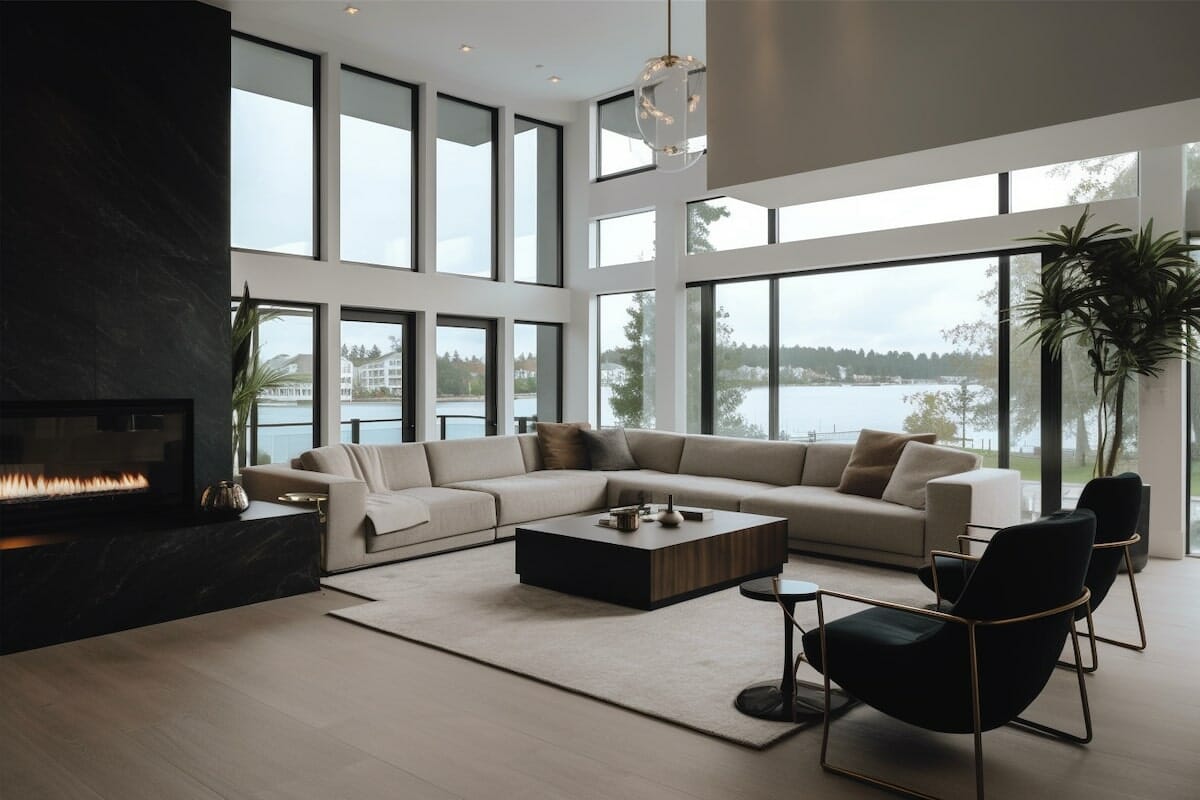
The Dark Wood Revival in Minimalism is the perfect synthesis of opposites. It takes the weight of history and makes it float. It takes the darkness of the Victorian era and fills it with light. It takes the simplicity of minimalism and fills it with soul.
Whether you choose to install a statement black walnut staircase, refinish a vintage mid-century credenza, or simply swap out your light oak nightstand for a rich mahogany one, you are participating in a design evolution. You are choosing quality over quantity, texture over flatness, and permanence over trendiness. In a world of fast-everything, choosing dark wood is choosing to slow down. And that, perhaps, is the most modern choice of all.