

In an era defined by climate crises, overflowing landfills, and an unrelenting consumer culture, a quiet revolution is taking shape. It does not announce itself with flashy advertisements or viral marketing campaigns. Instead, it whispers through the deliberate choices of individuals who have decided that enough is enough. This movement is called sustainable minimalism, and it proposes a radical yet simple idea: owning less is not just personally liberating it is essential for the survival of our planet.
Sustainable minimalism is frequently misunderstood as merely owning fewer possessions or adhering to a strict aesthetic of white walls and empty shelves. In reality, it is a comprehensive lifestyle philosophy that merges the intentionality of minimalism with the ecological conscience of sustainability. It asks us not only to declutter our homes but also to examine the entire lifecycle of everything we bring into our lives. Where did it come from? Who made it? What resources were extracted? How long will it last? And where will it go when we are done with it?
This article explores the profound intersection between minimalism and environmental stewardship. We will examine why sustainable minimalism matters now more than ever, how to implement it across various aspects of life, the psychological barriers we must overcome, and why this philosophy represents our most viable path forward.
Why Less Became Imperative
To understand why sustainable minimalism has shifted from a niche lifestyle choice to an urgent necessity, we must first confront the uncomfortable reality of our current consumption patterns.
The global economy is structured around perpetual growth, and that growth depends on consumers buying more, upgrading more frequently, and discarding items long before their usefulness has expired. This is not accidental. Planned obsolescence the deliberate design of products with artificially limited lifespans has been standard industrial practice for nearly a century. From smartphones that cannot accept software updates after two years to clothing that unravels after a handful of washes, we are trapped in a cycle of forced consumption.
The environmental consequences are staggering. According to the United Nations Environment Programme, the extraction and processing of materials account for over half of global greenhouse gas emissions and more than ninety percent of biodiversity loss. The fashion industry alone generates more carbon emissions than international aviation and shipping combined. Electronic waste is the fastest-growing waste stream on Earth, with approximately fifty million metric tons generated annually yet less than twenty percent is formally recycled.
These statistics can feel abstract and overwhelming, but they represent something deeply personal. Every item we purchase carries with it an invisible shadow of resources consumed and waste generated. When we buy a five-dollar t-shirt, we are not simply acquiring a cheap garment. We are participating in a system that depletes water tables, exploits underpaid laborers, and releases toxic dyes into rivers. When we upgrade our perfectly functional smartphone, we are contributing to the mining of conflict minerals and the creation of non-biodegradable e-waste that will poison communities in developing nations.
Sustainable minimalism breaks this cycle not through deprivation, but through intentionality. It recognizes that refusing to participate in mindless consumption is not an act of sacrifice it is an act of liberation.
The Philosophical Foundations of Sustainable Minimalism
Sustainable minimalism draws from several intellectual and spiritual traditions, each contributing essential insights about humanity’s relationship with material possessions.
A. Ancient Stoicism and Voluntary Simplicity
The Stoic philosophers of ancient Greece and Rome understood that happiness does not arise from the accumulation of external goods, but from internal virtue and contentment. Seneca famously wrote that “it is not the man who has too little who is poor, but the one who hankers after more.” This wisdom resonates powerfully in an age of consumer debt and storage unit rentals. Voluntary simplicity movements throughout history from the Quakers to Thoreau at Walden Pond have reiterated that a life of deliberate restraint is not impoverished but enriched.
B. Buddhist Teachings on Non-Attachment
Buddhist philosophy teaches that suffering arises from attachment and craving. The endless pursuit of newer, better, more beautiful possessions keeps us trapped in a cycle of dissatisfaction. Non-attachment does not mean rejecting the material world; it means interacting with possessions mindfully, appreciating their utility without allowing them to define our identity or self-worth. This perspective transforms decluttering from a chore into a spiritual practice.
C. Indigenous Wisdom and Interconnectedness
Many indigenous cultures view the natural world not as a collection of resources to be exploited, but as a web of relationships to be honored. The concept of Seventh Generation stewardship considering the impact of decisions on descendants seven generations into the future offers a powerful alternative to quarterly earnings reports and planned obsolescence. Sustainable minimalism incorporates this long-term thinking by prioritizing durability, repairability, and responsible disposal.
D. Ecological Economics and Steady-State Theory
Herman Daly, a pioneering ecological economist, argued that infinite growth on a finite planet is impossible. He proposed a steady-state economy characterized by stable consumption and population, where technological progress focuses on efficiency rather than throughput. Sustainable minimalism operationalizes this macroeconomic theory at the household level. Each of us can choose to stabilize our own consumption, demonstrating that quality of life need not depend on quantity of stuff.
Practical Implementation: How to Embrace Sustainable Minimalism

Theory provides direction, but practice requires concrete strategies. Sustainable minimalism manifests differently for everyone, but certain principles and actions consistently emerge.
A. Conduct a Consumption Audit
Before you can change your habits, you must understand them. For thirty days, document every non-essential purchase. Include the item, its cost, its material composition, its country of origin, and your reason for buying it. At the end of the month, review your audit with honesty. You will likely identify patterns: emotional purchases made during stress, impulse buys triggered by social media advertisements, or replacement purchases for items that could have been repaired.
This exercise is not about shame. It is about awareness. Once you recognize your consumption triggers, you can develop counter-strategies. Perhaps you implement a thirty-day waiting period for all non-essential purchases. Perhaps you unsubscribe from promotional emails or unfollow influencers who cultivate desire. Perhaps you create a “wish list” and discover that most items lose their appeal after a week of reflection.
B. Apply the Five-Question Gatekeeping System
Before acquiring anything new whether purchased, gifted, or free ask yourself:
-
Do I truly need this, or do I merely want it? Need implies function and necessity. Want implies desire that may pass.
-
What problem does this solve? All possessions should solve genuine problems. A warm coat solves the problem of cold. A decorative figurine does not solve any problem unless it brings meaningful joy that enhances your wellbeing.
-
Can I borrow, rent, or buy it used? Libraries, tool libraries, clothing swaps, and secondhand markets can satisfy most needs without demanding new production.
-
What will my life look like in five years? Will I still want this? Considering your future self prevents accumulation based on temporary whims.
-
Where will this item go when I no longer need it? If it is not biodegradable, easily recyclable, or safely compostable, you are creating future waste.
C. Prioritize Materials That Matter
Not all possessions are created equal. When acquisition is necessary, material selection dramatically impacts environmental footprint.
Natural fibers such as organic cotton, linen, hemp, and wool biodegrade at end of life and require less energy-intensive processing than synthetics. However, they are not without impact—conventional cotton is notoriously water-intensive. Seek certifications like Global Organic Textile Standard and Fair Trade.
Sustainably harvested wood stores carbon throughout its useful life and can be composted or repurposed. Avoid composite wood products containing formaldehyde-based adhesives.
Glass and metal are infinitely recyclable without quality degradation. While their production is energy-intensive, their circularity makes them environmentally preferable to single-use plastics.
Avoid virgin plastic, especially single-use applications, and materials that cannot be recycled in standard municipal programs. Also avoid blended fabrics that are impossible to separate for recycling.
D. Embrace the Repair Revolution
Sustainable minimalism rejects the disposability mindset. When something breaks, our first instinct should be repair, not replacement. This requires re-skilling ourselves in an era when many of us have never darned a sock or replaced a laptop battery.
Start small. Learn to sew buttons and mend simple tears. Watch YouTube tutorials for common appliance repairs. Support local repair shops and cobblers. Participate in Repair Cafés where volunteers help fix everything from bicycles to blenders. Each successful repair is a small victory against planned obsolescence.
E. Optimize Space Through Multi-Functionality
Limited possessions do not mean limited capability. Thoughtful selection of multi-functional items reduces overall count while maintaining or even enhancing utility.
A cast iron skillet can replace non-stick pans, bakeware, and even bread loaf pans. A well-designed sofa bed accommodates guests without requiring a dedicated guest room. A quality smartphone with e-reader functionality eliminates the need for separate devices. Digital tools like scanner apps reduce paper clutter while maintaining important documents.
F. Implement One-In-One-Out Boundaries
For many categories of possessions, absolute quantity matters less than flow. Establish a boundary: for every new item that enters your home, one similar item must leave. This prevents accumulation while acknowledging that some replacement purchases are legitimate. When you purchase new running shoes, responsibly donate or recycle the worn pair. When you receive a book as a gift, select another book to pass along.
G. Rethink Gifting and Celebration
Consumer culture has deeply intertwined gift-giving with love and celebration. Sustainable minimalism challenges us to separate these concepts. Experiences, consumables, and donations to meaningful causes can express affection more authentically than mass-produced objects.
Consider gifting cooking classes, concert tickets, museum memberships, or contributions to a loved one’s hobby fund. Homemade preserves, baked goods, or fermented specialties carry more meaning than store-bought items. For children, contribute to education savings accounts or experiential gifts that create memories rather than accumulating plastic.
Sustainable Minimalism Across Life Domains
While the philosophy remains consistent, its application varies across different aspects of life.
A. The Sustainable Minimalist Wardrobe
The fashion industry’s environmental devastation is well-documented, yet many of us continue to purchase clothing compulsively. Building a sustainable minimalist wardrobe involves several intentional steps.
Capsule Wardrobes: A capsule wardrobe consists of approximately thirty to forty interchangeable, high-quality items that suit your lifestyle and personal aesthetic. Each piece is chosen for its versatility, durability, and timelessness. Seasonal rotation allows variety without accumulation.
Uniform Dressing: Some individuals simplify further by adopting a personal uniform. Steve Jobs’ black turtlenecks and Barack Obama’s gray suits were not fashion statements they were cognitive optimization strategies that conserved decision-making energy. You need not wear identical items daily, but reducing the range of acceptable options simplifies dressing and reduces consumption pressure.
Care and Maintenance: Proper care extends garment life dramatically. Wash clothes less frequently, in cold water, and air-dry when possible. Learn to remove stains without harsh chemicals. Store wool with cedar blocks to deter moths. These practices honor the resources invested in your clothing.
B. The Sustainable Minimalist Home
Our homes should be sanctuaries, not storage facilities. Yet the average American home contains over three hundred thousand items, and the self-storage industry has grown into a forty-billion-dollar enterprise.
Surface Minimalism: Clear horizontal surfaces create psychological calm. Commit to keeping countertops, tables, and floors free of non-essential items. Every object should have a designated home, and items should return home after use.
Kitchen Efficiency: The most sustainable kitchen is not necessarily the most technologically advanced. A well-seasoned cast iron skillet, a sharp chef’s knife, and basic mixing bowls accomplish more than a drawer full of unitask gadgets. Preserve food in glass containers rather than disposable plastics. Compost organic waste.
Mindful Decorating: Decorative objects should be chosen with extreme selectivity. Each piece should genuinely spark joy or hold profound meaning. Consider displaying items rotationally rather than simultaneously. Empty wall space is not a deficiency requiring correction.
C. The Sustainable Minimalist Digital Life
Digital clutter carries environmental consequences through energy consumption and electronic waste. Our tendency to hoard files, maintain unused subscriptions, and upgrade devices prematurely compounds our footprint.
Digital Decluttering: Delete unused applications, duplicate photos, and obsolete files. Unsubscribe from newsletters that go unread. Maintain a clean, organized file system that facilitates retrieval rather than endless recreation.
Device Longevity: The greenest device is the one already in your possession. Resist upgrade cycles. Replace batteries rather than entire phones. Consider used or refurbished electronics when new devices are unavoidable.
Streaming and Data: Digital infrastructure consumes massive energy. Stream video at standard definition when high definition is unnecessary. Download music for offline listening rather than streaming repeatedly. Delete cloud files you no longer need.
D. Sustainable Minimalism in Transportation
Transportation accounts for approximately one-quarter of global energy-related carbon dioxide emissions. Sustainable minimalism encourages us to scrutinize our mobility choices.
Active Transportation: Walking and cycling generate zero emissions while providing health benefits. Advocate for infrastructure that makes these modes safe and accessible.
Public Transit and Ridesharing: Buses and trains move people far more efficiently than individual vehicles. When personal vehicles are necessary, choose the smallest, most efficient option that meets your needs.
Rethinking Car Ownership: In many urban areas, car-sharing services and rentals make more sense than private ownership. The average vehicle sits idle ninety-five percent of the time, representing enormous embedded resource waste.
Overcoming Psychological Barriers
If sustainable minimalism offers such compelling benefits, why do so few of us practice it fully? The obstacles are not logistical they are psychological and cultural.
Status and Identity: For centuries, material possessions have signaled social status and personal identity. We are what we own. Rejecting accumulation can feel like rejecting social belonging. Overcoming this requires cultivating alternative sources of identity and status. Perhaps we derive self-worth from our skills, our relationships, or our contributions to community rather than our consumer choices.
Fear of Scarcity: Many of us, even those who have never experienced genuine deprivation, harbor anxiety about future scarcity. We hoard because we fear needing something that we have discarded. This anxiety is understandable but irrational in wealthy nations. We can test our fears by storing items in a labeled box for six months. If we never open the box, we never needed its contents.
Sunk Cost Fallacy: We struggle to release items because we remember what we paid for them, even though that cost is irrecoverable. This fallacy keeps us surrounded by items that no longer serve us. Recognizing that the money is already spent and cannot be recovered by continuing to store the item frees us to release it.
Aspirational Accumulation: We buy items not for who we are, but for who we wish to become. Exercise equipment for the person who will work out daily, cookbooks for the gourmet chef who will emerge, art supplies for the painter who will eventually create. While aspiration is healthy, accumulation without action is wasteful. Commit to either using aspirational items within thirty days or releasing them.
The Collective Dimension
Sustainable minimalism is often framed as an individual lifestyle choice, but its ultimate impact depends on collective action. Individual choices matter they reduce personal footprints and model alternatives but systemic change requires political engagement and community building.
Policy Advocacy: Support policies that discourage waste and encourage durability. Extended producer responsibility laws require manufacturers to manage end-of-life disposal, incentivizing repairable, recyclable design. Right-to-repair legislation prevents companies from monopolizing repair information and parts. Carbon taxes internalize environmental costs currently externalized onto communities and future generations.
Community Infrastructure: Individual minimalists cannot thrive in isolation. We need libraries for tools, seeds, and musical instruments. We need repair cooperatives and clothing swaps. We need bulk purchasing groups that reduce packaging waste. Building and participating in this infrastructure multiplies individual impact.
Cultural Narrative Change: The stories we tell about consumption shape our reality. Advertising tells us that new purchases will transform our lives. Sustainable minimalism offers counter-narratives: that contentment comes from within, that enough is plenty, that restraint is not deprivation but dignity. Sharing these narratives through conversation, social media, and creative expression accelerates cultural evolution.
Conclusion: Less Is Indeed the Future
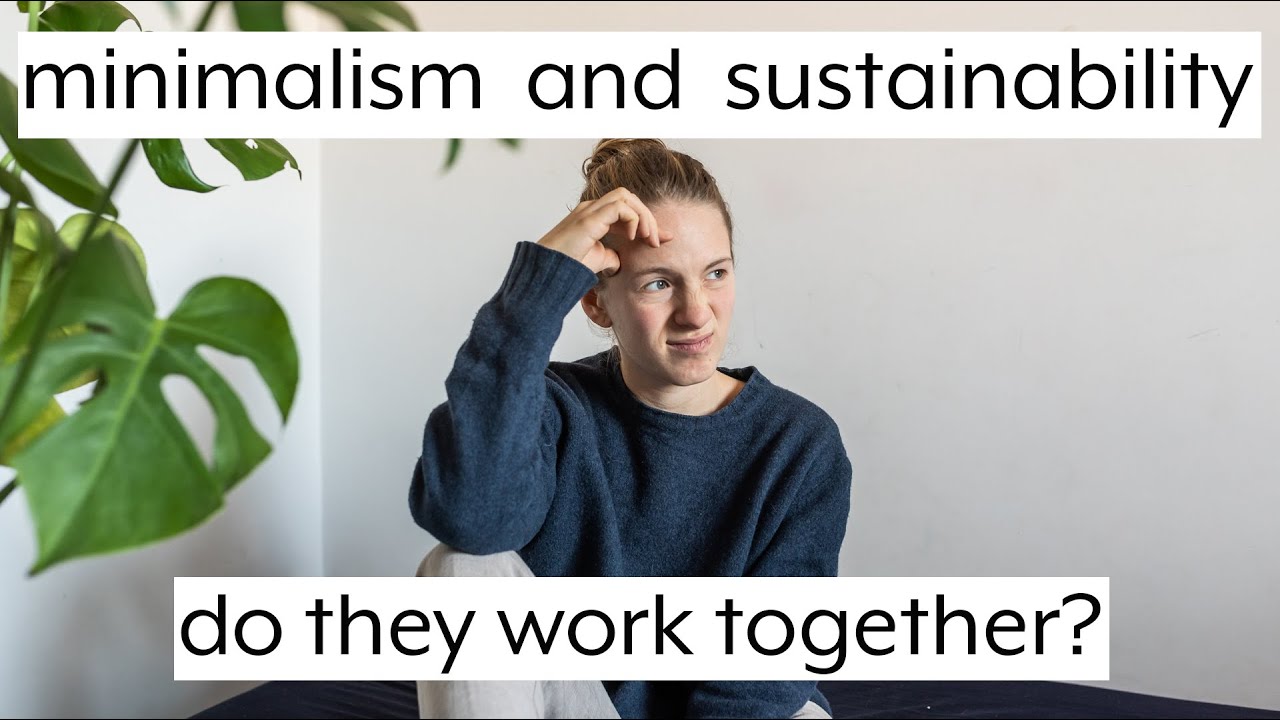
Sustainable minimalism is not about deprivation or moral purity. It is not about competing to see who can own the fewest items. It is not a temporary decluttering project or an aesthetic preference.
It is, instead, a recognition that our current trajectory is unsustainable and that meaningful change requires fundamental reorientation of our relationship with material goods. It is an acknowledgment that the Earth’s resources are finite and that our consumer economy has been treating the planet as if it were an infinite supply depot and an infinite waste repository.
The future will be minimalist because it must be. Whether we arrive at this future through conscious choice or forced necessity depends on decisions we make today. Each item we refuse to purchase, each repair we complete, each secondhand treasure we rescue from landfill, each conversation we initiate about living with less these are not insignificant gestures. They are the building blocks of a new economy and a new culture.
Less is not merely more. Less is the foundation upon which a livable future will be built. Less is liberation from the exhausting pursuit of satisfaction through acquisition. Less is the space we create for what truly matters: meaningful work, authentic relationships, connection with nature, contribution to community, and the quiet joy of knowing that we are part of the solution rather than the problem.
Sustainable minimalism invites us to ask not “What can I acquire?” but “What can I release?” It transforms our homes from storage units into sanctuaries. It transforms our economy from extraction and disposal into regeneration and stewardship. It transforms our lives from anxious accumulation into intentional presence.
The path of sustainable minimalism is not always easy in a culture that profits from our dissatisfaction. But it is available to everyone, regardless of income or circumstance. It begins with a single question asked of every possession, every purchase, every acquisition: Does this serve my life and honor the Earth?
When enough of us answer that question honestly, we will discover that we have not given up anything of value. We have only cleared away the excess that was obscuring what we truly need.