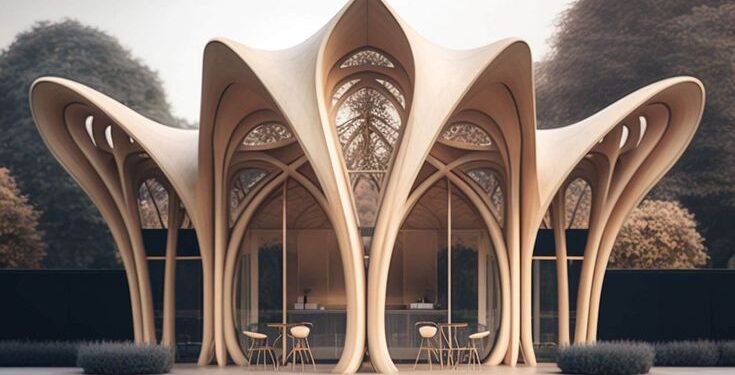
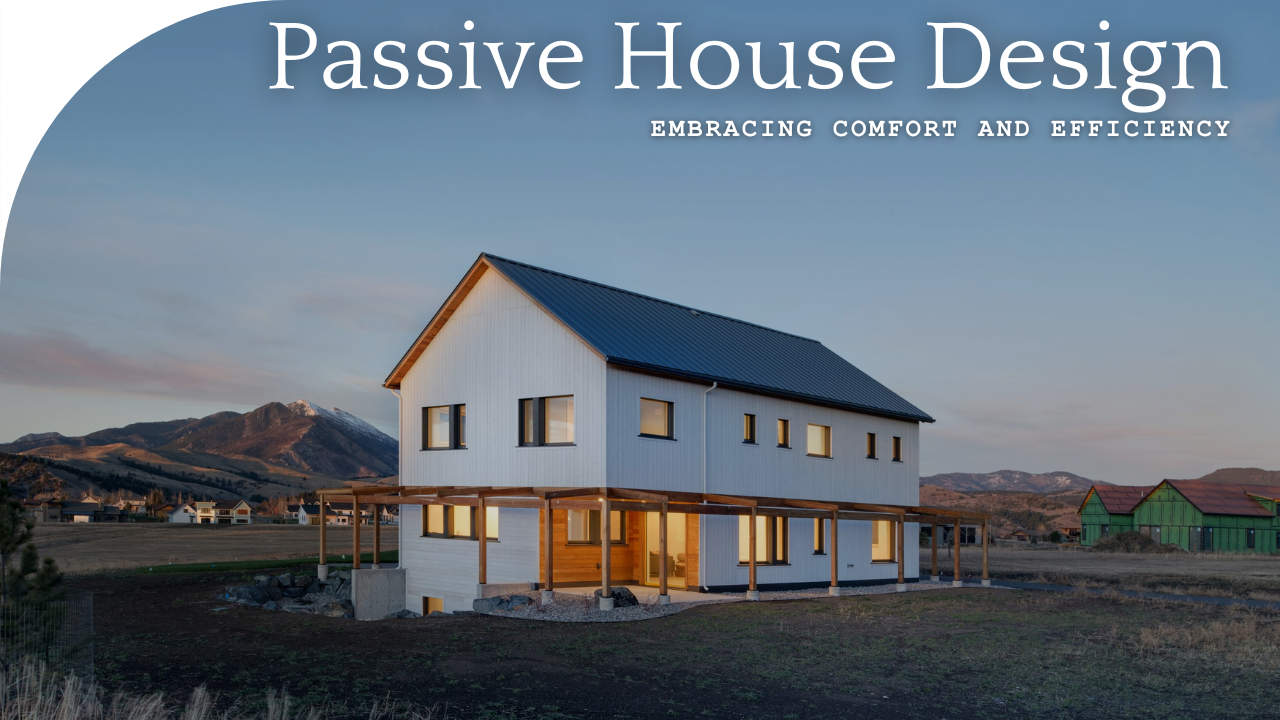
The world of architecture and construction is undergoing a profound transformation. As climate change accelerates and energy costs rise, the demand for buildings that are both sustainable and visually striking has never been higher. At the intersection of this demand lies a compelling concept: the marriage of Passive House standards with modern aesthetic sensibilities. Far from the boxy, utilitarian structures of the past, today’s high-performance homes are proving that net-zero energy consumption and breathtaking design are not mutually exclusive. This comprehensive exploration delves into how the rigorous scientific principles of Passivhaus are being seamlessly woven into the fabric of 21st-century architecture, creating homes that are as beautiful as they are efficient.
Understanding the Passive House Standard
Before examining the aesthetic implications, one must first understand what the Passive House standard truly entails. Developed in Germany in the 1990s by Dr. Wolfgang Feist, the Passivhaus standard is widely regarded as the world’s most rigorous, voluntary, energy-based construction standard. It is not a brand name, but a precise, science-backed construction concept.
To achieve certification, a building must meet specific criteria:
-
Heating and Cooling Demand: The annual heating and cooling demand must not exceed 15 kWh per square meter of living space per year.
-
Primary Energy Demand: The total energy used for all domestic applications (heating, hot water, electricity) must not exceed 120 kWh per square meter per year.
-
Airtightness: The building must pass a pressurized blower-door test, registering no more than 0.6 air changes per hour at 50 Pascals of pressure.
-
Thermal Comfort: The indoor temperature must remain comfortable year-round, with no more than 10% of the hours in a given year exceeding 25°C.
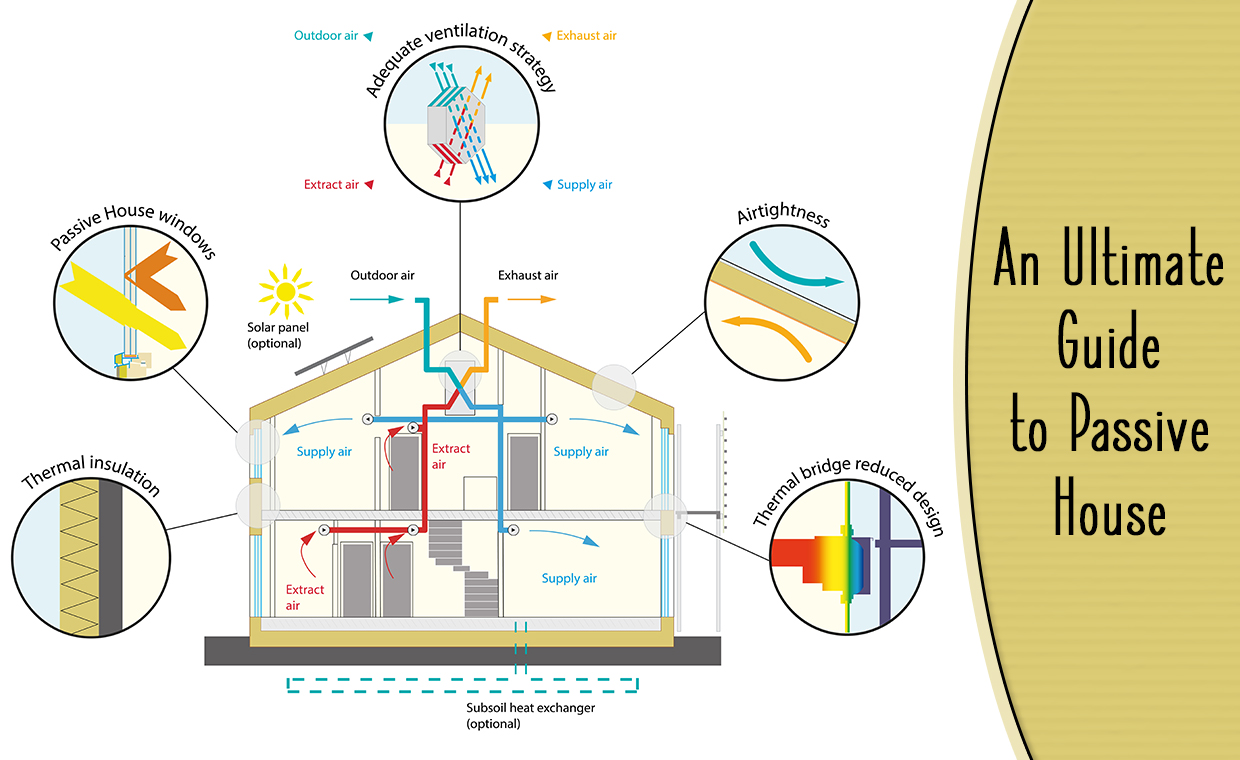
These figures represent a 75% to 90% reduction in heating and cooling energy compared to typical conventional buildings. This is achieved not through complex active systems, but through five core principles: superior insulation, elimination of thermal bridges, airtight construction, high-performance glazing, and mechanical ventilation with heat recovery (MVHR).
The Historical Divide: Efficiency vs. Beauty
Historically, there has been a palpable tension between “green” buildings and “beautiful” buildings. Early eco-homes of the 1970s and 80s were often defined by ad-hoc solar panels, mismatched cladding, and makeshift greenhouses. They prioritized function over form, inadvertently creating a public perception that sustainable architecture required a sacrifice of luxury and comfort. This is precisely where the modern Passive House movement has pivoted.
Today’s architects are rejecting the notion that high-performance buildings must look industrial or vernacular. Instead, they are leveraging the constraints of the Passive House standard as a catalyst for creativity. The thick walls required for super-insulation, for example, are no longer hidden; they are celebrated as deep window reveals, adding shadow and depth to facades.
The Modern Aesthetic: Clean Lines and Intentionality
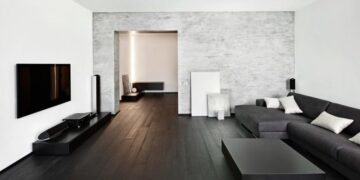
Modern design often characterized by minimalism, open floor plans, and a strong connection between interior and exterior spaces finds a natural ally in Passive House principles.
A. Material Honesty and Texture
Modern aesthetics frequently rely on the raw beauty of materials. In a Passive House, materiality is not just visual; it is functional. The high mass materials used for thermal stability, such as polished concrete slabs or exposed masonry, double as stunning visual anchors for a room. Likewise, timber often used for structural frames due to its low carbon footprint is left exposed, adding warmth and biophilic elements to the living space. The need for continuous insulation allows architects to wrap homes in uniform “blankets,” often finished with sleek renders, metal panels, or vertically aligned cedar planking that accentuate the clean geometry of the structure.
B. The Role of Fenestration
Perhaps the most significant battleground between energy efficiency and design has historically been the window. Large expanses of glass are the hallmark of modern design, yet glass is typically the weakest thermal link in a building envelope. Passive House overcomes this through the use of triple-glazed, argon-filled windows with insulated frames and warm-edge spacers. This technology allows architects to install floor-to-ceiling windows without the fear of cold drafts or heat loss. The result is a light-filled interior that blurs the line between indoors and out, a core tenet of contemporary living.
C. Elimination of Clutter
Passive House design requires meticulous planning of the thermal envelope. This naturally eliminates visual clutter. Bulkheads, dropped ceilings, and furred-outs often used in traditional construction to hide ductwork and plumbing are minimized. The mechanical systems are centralized and compact. This forced simplicity aligns perfectly with the modern minimalist ethos where “less is more.”
Key Strategies for Integrating Passive House and Modern Design
To successfully merge these two worlds, architects and builders employ a variety of specific strategies that address both physics and visual appeal.
1. Optimizing Solar Orientation and Shading
Modern architecture loves glass, but uncontrolled solar gain leads to overheating. The solution lies in passive solar design. Architects strategically place larger glazing on the south facade to capture low winter sun, while utilizing deep overhangs, brise-soleil, or external automated blinds to block the high summer sun. These shading devices, once considered purely functional, are now being designed as sculptural elements. Perforated metal screens, for instance, cast beautiful shadows throughout the day and add a layer of privacy without sacrificing daylight.
2. Reimagining the “Box”
The requirement for a compact building shape to minimize surface area loss might suggest boring, shoebox-like structures. However, modern architects are using this constraint to create sophisticated compositions. By interlocking several “compact boxes” at slight angles or split levels, designers create dynamic volumes. These forms are then wrapped in a continuous, unbroken insulation layer, resulting in a monolithic appearance that is highly coveted in luxury modern architecture.
3. Integrating the MVHR System
A Passive House requires constant ventilation via an MVHR system, which requires ductwork. In traditional construction, ductwork is bulky and hidden in attics or large dropped ceilings. Modern Passive House design integrates these systems into the core of the home. Designers utilize furred-out walls in specific corridors or create feature walls that house the ducting. The intake and exhaust vents, visible on the exterior, are treated as design details—custom stainless steel cylinders or flush-mounted grilles that match the home’s color palette.
4. Thermal Bridge-Free Detailing
A thermal bridge is a path through the insulation where heat can escape. In standard construction, this occurs at balconies or roof eaves that penetrate the wall. To avoid this, modern Passive House designs often feature “cantilevered” structures. Balconies are structurally independent of the main floor slab, creating a visible “break” between inside and outside. This architectural detail, a thermal separation, also creates a distinct visual separation, making the home appear as a series of floating planes.
Case Studies: Where Innovation Lives
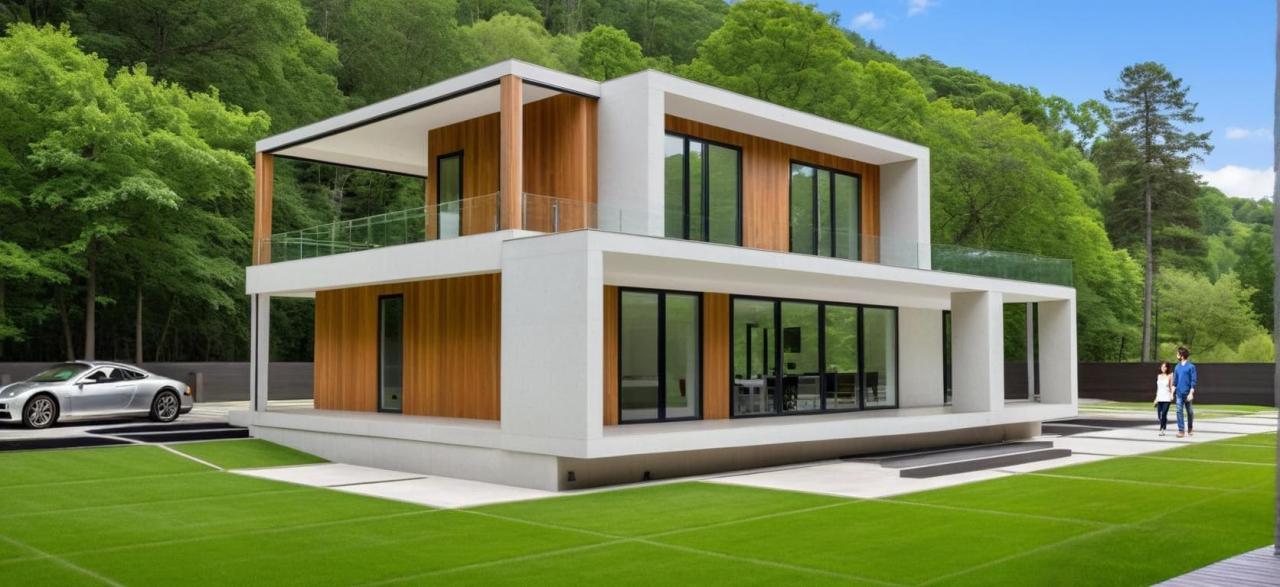
To truly grasp the potential of this fusion, one must look at real-world applications that have pushed the envelope.
The Biological Lab by Olson Kundig
While a commercial project, this building demonstrates how stringent energy codes and high design coexist. The architects used heavy timber and massive glazing systems certified to Passive House standards. The result is an industrial-chic workspace that feels organic and connected to its natural site, proving that Passive House is viable outside of residential contexts.
The Net-Zero Row House in Brooklyn
Urban infill projects are notoriously difficult to insulate due to shared walls. A row house in Brooklyn retrofitted to the EnerPHit (Passive House retrofit) standard showcases how modern aesthetics can revitalize historic neighborhoods. The rear facade was replaced with a floor-to-ceiling glass wall, framed by sleek black metal. Internally, the original brick party walls were preserved, sandblasted clean, and left exposed, creating a textural contrast against the new, smooth drywall and modern kitchen cabinetry.
The Mountain Cabin in the Alps
Situated in a harsh climate, this cabin uses a typical A-frame silhouette a nod to vernacular architecture but executes it with Passive House precision. The exterior is clad in charred larch (a nod to the Japanese Shou Sugi Ban technique), which is highly durable and requires no chemical treatment. The interior is lined with birch plywood, regulating humidity naturally. The deep window seats, a result of the thick wall assembly, have become the favorite reading nooks of the inhabitants.
Overcoming Challenges in Design and Construction
Despite the obvious benefits, the path to combining high-performance building with high-end design is not without obstacles.
A. The Cost of Premium Components
High-performance triple-glazed windows and certified Passive House doors are significantly more expensive than standard assemblies. Additionally, the need for continuous insulation requires complex framing details that are labor-intensive. However, proponents argue that the cost premium (typically 5-15% above conventional construction) is offset by the elimination of a traditional HVAC system and decades of negligible utility bills.
B. The Learning Curve for Trades
Modern aesthetics often demand flush-set windows, hidden fasteners, and seamless transitions between flooring materials. In a Passive House, these details are harder to execute because the membrane must remain absolutely intact. A single screw penetrating the air barrier in the wrong place can compromise the entire building. This requires a high level of skill and coordination, emphasizing the need for specialized training among contractors.
C. Balancing Daylight with Thermal Comfort
While large windows are desirable, even triple glazing has a lower R-value (thermal resistance) than an insulated wall. There is a physical limit to how much glass can be installed before the energy balance is tipped. Architects must use sophisticated modeling software to calculate the exact glazing ratio. This forces a discipline in design; every window is placed with a purpose, framed as a “view” rather than just a wall of light.
The Psychological and Health Benefits
Beyond energy savings and aesthetics, the Passive House + Modern Design combination offers profound benefits to the human experience.
Indoor Air Quality: The constant filtration of incoming air through the MVHR system removes pollen, dust, and outdoor pollutants. For allergy sufferers, this is transformative. In a sleek, modern home where clean lines prevail, the absence of dust-collecting ledges and the presence of pure air contribute to a sense of serenity.
Thermal Stability: There is no “cold corner” in a Passive House. The surface temperature of the walls and windows remains consistent with the air temperature. This radiant comfort allows occupants to utilize the entire floor plan, even sitting directly next to a window in winter, without discomfort. This challenges the traditional arrangement of modern furniture, allowing for more flexible and dynamic interior layouts.
Acoustic Comfort: The thick walls, triple glazing, and airtight construction create a remarkably quiet indoor environment. In an era of open-plan living, this acoustic separation is a luxury. The silence allows the visual aesthetics the texture of a concrete wall, the grain of a wood floor to be experienced without auditory distraction.
The Role of Technology and Software
The modern aesthetic relies on precision. Curves, cantilevers, and sharp edges must be executed perfectly. Passive House design relies on the Passive House Planning Package (PHPP), a sophisticated energy modeling tool. Today, architects are using BIM (Building Information Modeling) to integrate PHPP data directly into the 3D model. This allows for real-time feedback; the architect can adjust the size of a window overhang in the digital model and instantly see the impact on the annual cooling demand. This synergy ensures that the aesthetic vision does not inadvertently sabotage the energy goals.
Future Trends: Biophilic Design and Circular Economy
The next evolution of this movement is the integration of biophilic design and circular economy principles.
Biophilic Integration: Modern Passive Houses are increasingly incorporating living walls and indoor gardens. The stable humidity and controlled temperature provided by the MVHR system create an ideal microclimate for delicate plants. This blurs the line between the “machine for living” and the natural world.
Circular Materials: The modern aesthetic currently favors natural plasters, clay paints, and bio-based insulation like hemp or wood fiber. Unlike petrochemical-based foams, these materials sequester carbon and are compostable at the end of their life. This aligns with the Passive House goal of total sustainability, moving beyond operational energy to embodied carbon.
Conclusion
The meeting of Passive House and modern aesthetics marks the maturation of sustainable architecture. It represents a shift from viewing green building as a niche specialty to seeing it as the baseline for quality construction. We are no longer asking whether a building can be both efficient and beautiful; we are asking how efficient and beautiful we can possibly make it.
The constraints of the Passive House standard the thick walls, the strict orientation, the compact form are not creative limitations. They are the very parameters that define the elegant, minimal, and high-performance homes of the future. As material technology advances and software becomes more intuitive, the distinction between a “Passive House” and a “Modern House” will vanish. All quality architecture will, by default, be high-performance architecture. The homes of tomorrow will not announce their green credentials through visible gadgetry, but through the quiet, luxurious comfort of a space that is perfectly in tune with its environment.