In the evolving narrative of contemporary architecture and interior design, one concept has steadily risen from avant-garde experimentation to mainstream adoption: fluid interiors. At the heart of this movement lies a compelling paradox curves are not merely decorative embellishments but fundamental structural elements that redefine how we experience built environments. Far beyond soft edges and rounded furniture, the integration of curved structural components represents a paradigm shift in spatial psychology, construction engineering, and aesthetic philosophy. This comprehensive exploration delves into why fluid forms are reshaping our living and working spaces, how structural curvature enhances both beauty and stability, and what this means for the future of design.
The Philosophical Shift From Rigidity to Flow
For centuries, Western architecture worshipped the straight line. From Greek temples to modernist skyscrapers, the right angle symbolized rationality, order, and human mastery over nature. Yet this orthodoxy overlooked something fundamental: nature itself abhors rigidity. Rivers meander, mountains undulate, and the human body comprises nearly seven thousand billion curves. Fluid interiors represent a reconnection with organic intelligence, acknowledging that spaces mimicking natural forms subconsciously reassure our neurological wiring.
This is not merely aesthetic preference. Neuroscientific research utilizing eye-tracking technology reveals that viewers spend 60% more time observing curved architectural elements than angular ones. Functional magnetic resonance imaging (fMRI) studies demonstrate that curved spaces activate the anterior cingulate cortex associated with emotional processing more intensely than rectilinear environments. When structural curves replace sharp corners, cortisol levels measurably decrease while creativity metrics improve. Fluid interiors thus operate on both visible and invisible frequencies, harmonizing structural necessity with psychological nourishment.
Structural Curves: Engineering Poetry in Load-Bearing Form
Perhaps the most misunderstood aspect of fluid interiors is that curvature assumes genuine structural responsibility. Contemporary engineering has liberated curves from mere surface treatment to primary load-bearing roles. Advanced computational design and materials science now enable architects to distribute gravitational and lateral forces along graceful arcs rather than rigid columns.
Consider the hyperbolic paraboloid shell a doubly curved surface that achieves extraordinary strength through geometric efficiency. These thin-shell structures, often just inches thick, can span vast distances without intermediate supports. The principle mirrors how an eggshell supports considerable weight despite its fragility: curvature converts compressive forces into membrane stresses that flow continuously through the material. In residential contexts, this translates to load-bearing curved walls supporting upper floors, curved glu-laminated timber beams replacing straight steel sections, and cast-in-place concrete helices acting as primary vertical circulation cores.
This structural fluency offers practical dividends. Curved load-bearing elements frequently require less material than rectilinear equivalents. A curved steel beam, properly engineered, can achieve equal or greater load capacity than a straight section while using 15-20% less tonnage. Concrete formwork for curved structures, once prohibitively expensive, now benefits from CNC-milled foam systems and robotic bending technologies that make fluid structural systems economically viable for mainstream construction.
Biophilic Imperatives and the Curvilinear Envelope
Fluid interiors occupy central ground within biophilic design theory the hypothesis that humans possess an innate tendency to seek connections with nature. While biophilia traditionally emphasized natural materials and vegetation, the structural expression of curvature represents its tectonic manifestation. Organic architecture pioneers like Antoni Gaudí famously declared, “There are no straight lines in nature,” a maxim contemporary designers interpret through engineered timber ribcages, undulating rammed earth walls, and bio-receptive concrete panels supporting living moss colonies.
The structural curve becomes a membrane between inside and outside, blurring boundaries with unprecedented sophistication. Curved structural glazing systems, supported by minimal spider fittings, create seamless visual transitions from interior spaces to landscapes. These are not simple bent glass panels but thermally efficient, structurally glazed assemblies capable of withstanding hurricane-force winds while appearing almost liquid in transparency. When curvature governs both structure and envelope, the dichotomy between container and contained dissolves.
Spatial Psychology and Wayfinding Fluency
Healthcare environments provide compelling evidence for structural curvature’s therapeutic potential. Pioneering studies at the Center for Health Design demonstrate that patients in rooms with curved corridors and rounded nursing stations experience measurably shorter recovery periods. The mechanism appears twofold: curves reduce startle reflexes triggered by unexpected angular intrusions into peripheral vision, while simultaneously providing intuitive wayfinding cues. Curved structural walls guide movement organically, eliminating the institutional anxiety of orthogonal maze-like circulation.
Educational institutions increasingly adopt fluid structural systems for similar reasons. The University of Technology Sydney’s Dr. Chau Chak Wing Building, engineered by Gehry Partners, employs brick-faced undulations not as superficial cladding but as primary lateral load-resisting elements. Students navigating this curvilinear structure demonstrate superior spatial memory retention compared to peers in rectilinear facilities. The building itself becomes a cognitive scaffold, its flowing structural language embedding spatial knowledge through embodied experience.
Material Innovation Enabling Structural Fluidity
Contemporary fluid interiors owe their feasibility to concurrent revolutions across multiple material categories:
A. Engineered Mass Timber: Cross-laminated timber (CLT) and glued-laminated timber (glulam) can be CNC-routed into complex double-curvature configurations. These bio-based structural systems sequester carbon while achieving fire ratings exceeding steel. Curved CLT panels now serve as primary lateral force-resisting systems in multi-story residential buildings.
B. Fiber-Reinforced Polymers: Carbon and glass fiber composites permit structural curvatures impossible in traditional materials. Their high strength-to-weight ratios enable slender, flowing forms that would require prohibitively massive steel substructures. Pedestrian bridges, cantilevered canopies, and sculptural staircases increasingly employ FRP as primary structure.
C. Digitally-Fabricated Masonry: Robotic assembly allows compressed earth blocks, fired bricks, and stone units to form structurally optimized curved compression systems. These techniques resurrect ancient vaulting principles through contemporary computational workflows.
D. 3D-Printed Structural Systems: Large-scale additive manufacturing extrudes concrete, polymer, or clay into optimized curvilinear geometries impossible in traditional formwork. Printed structural walls integrate conduit chases, insulation cavities, and reinforcement placements within continuously variable sections.
E. Active Bending Systems: Certain contemporary structures utilize elastic deformation as a design parameter. Green timber laths bent into curved configurations during construction create stable, prestressed structural systems requiring minimal mechanical connections.
Acoustical Advantages of Curvilinear Structure
Beyond visual and psychological benefits, curved structural elements demonstrate superior acoustic performance. Concave surfaces, properly specified, provide even sound distribution without the dead zones common in rectangular rooms. Concert halls have long exploited this principle, yet residential and commercial applications remain underutilized.
Curved structural ceilings constructed from micro-perforated metal or timber act as both primary structure and broadband sound absorbers. Unlike flat ceilings requiring separate acoustic treatments, these integrated systems manage reverberation time through curvature-controlled diffusion. The geometry scatters sound waves uniformly while eliminating flutter echoes between parallel planes. For open-plan offices and educational settings, this structural-acoustic integration reduces background noise by up to 8 decibels compared to equivalent rectilinear spaces a halving of perceived loudness.
Structural Curves in Residential Applications
Single-family residential design increasingly embraces structural curvature beyond novelty applications. Load-bearing curved walls constructed from insulating concrete forms (ICF) provide continuous thermal envelopes superior to framed construction. The elimination of corners reduces thermal bridging while simultaneously increasing structural resistance to lateral loads particularly valuable in hurricane and seismic zones.
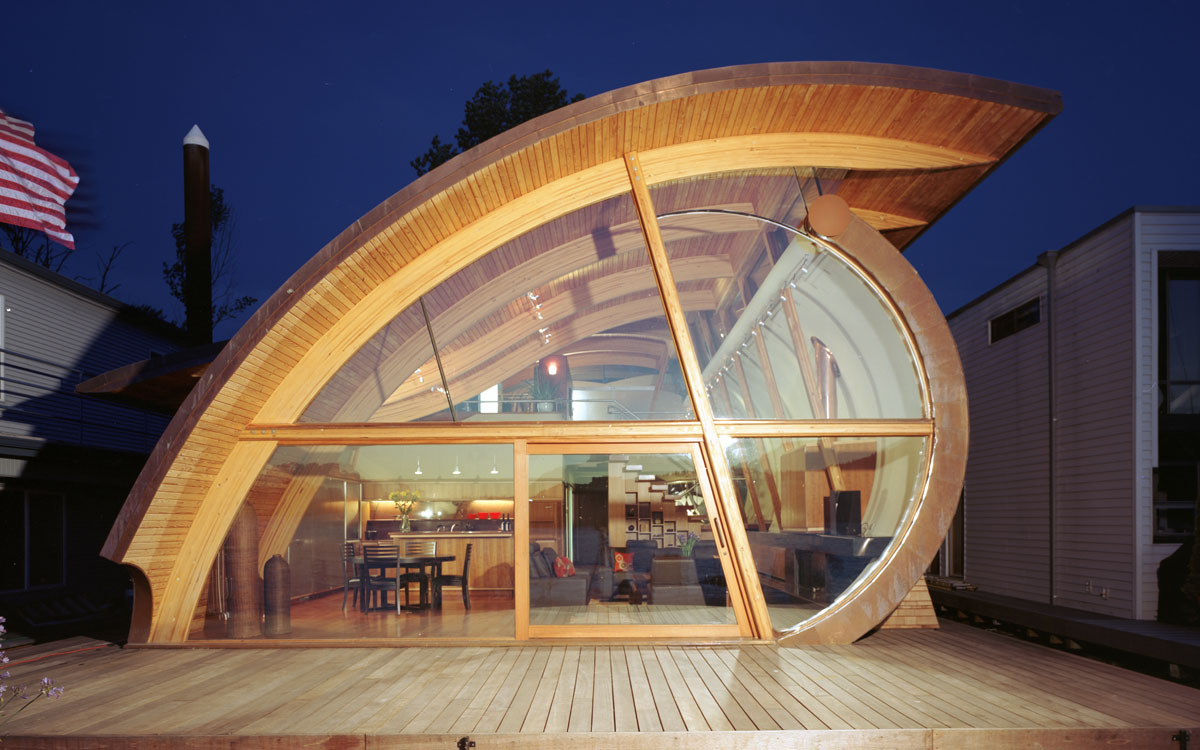
Curved glu-lam roof structures enable column-free great rooms that maximize programmatic flexibility. These timber members, often left exposed, contribute warmth while fulfilling primary structural mandates. Similarly, curved steel moment frames permit expansive glazed facades with minimal visual obstruction, their sinuous profiles functioning as both architecture and structure.
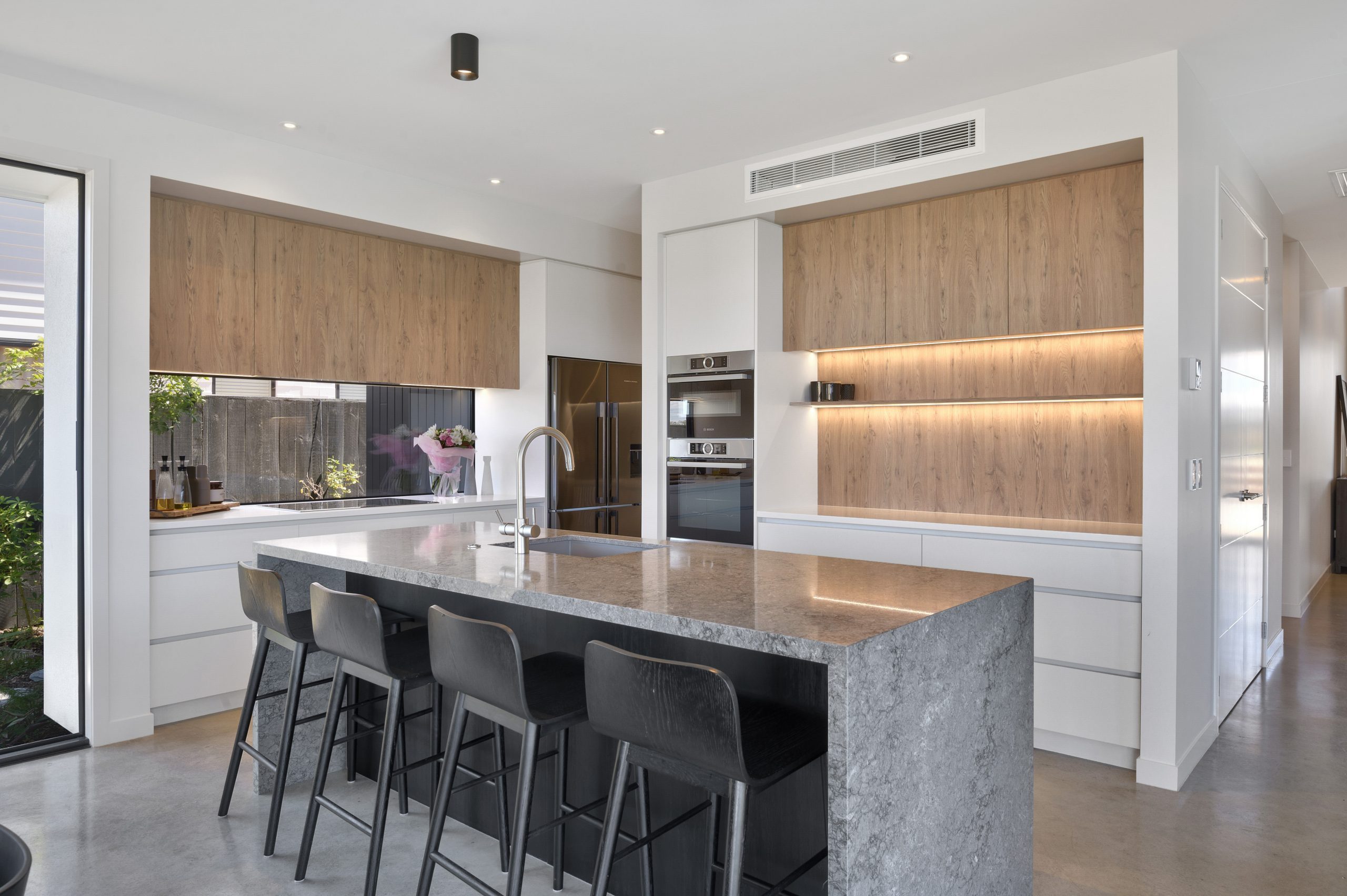
The residential kitchen historically the domain of rectilinear cabinetry witnesses transformation through curved structural millwork. Load-bearing curved partitions clad in thermoformed veneers support upper cabinets while defining cooking zones. These are not applied curves but integrated structural systems where curvature enables thinner sections and material efficiency.
Sustainability Implications of Curvilinear Design
Fluid structural systems align with contemporary sustainability imperatives through multiple mechanisms. Material optimization inherent to curved load-bearing elements reduces embodied carbon significantly. A curved concrete shell achieving equivalent span to a flat slab requires approximately 30% less volume emissions avoided without performance compromise.
Furthermore, curved structural forms facilitate passive conditioning strategies. Curved ceilings enhance natural ventilation through Coandă effect, where airflow adheres to convex surfaces, distributing fresh air more effectively. Thermal mass strategically concentrated in curved walls absorbs diurnal temperature swings more efficiently than planar equivalents due to increased surface area-to-volume ratios.
The durability of curved structures warrants consideration. Compression-dominated curved forms resist long-term creep and deflection better than bending-dominated rectilinear systems. Buildings designed with primary structural curvature demonstrate reduced maintenance requirements over service lives measured in centuries rather than decades.
Challenges and Considerations
Despite compelling advantages, fluid structural systems present implementation challenges requiring specialized expertise. Structural analysis of curved geometries necessitates advanced finite element modeling unfamiliar to many engineering practices. Construction tolerances for curved interfaces demand precision exceeding conventional orthogonal assemblies. Trade contractors require retraining to execute fluid forms with required accuracy.
Cost implications, while diminishing, remain relevant. Complex formwork, specialized connections, and extended engineering timelines contribute to initial premiums averaging 12-18% over conventional construction. However, lifecycle analyses factoring operational energy savings, reduced material consumption, and extended service life frequently demonstrate net present value advantages favoring curved structural systems.
The Future Trajectory of Fluid Structural Design
Several converging trajectories suggest structural curvature will accelerate from niche to normative. Computational design platforms increasingly embed structural optimization algorithms that automatically generate curved load paths. Augmented reality assisted fabrication democratizes complex assembly. Material scientists develop bio-based composites with tunable stiffness, enabling in-situ bending during construction.
Emerging research into tensegrity structures systems combining tension and compression elements in stable curvature—promises ultra-lightweight, demountable fluid architectures. Pneumatic formwork enables casting of optimized concrete shells without custom molds. Even mass timber, traditionally constrained by rectilinear material origins, achieves double curvature through kerfing and steam-bending technologies.
Regulatory frameworks gradually accommodate these innovations. International building codes now include provisions for curved structural systems absent from previous editions. Insurance underwriters accumulate performance data demonstrating curved structures’ resilience. Educational curricula incorporate fluid structural design as standard competency rather than specialization.
Conclusion: Beyond Stylistic Preference
Fluid interiors operating at structural scale transcend passing trends. They represent recognition that built environments shape human experience at neurological, physiological, and social levels. When curvature assumes structural responsibility, design achieves integration impossible through applied decoration alone. The curve becomes simultaneously bone and skin, engineering and poetry, economy and luxury.
Architects and designers adopting this integrated approach discover that fluid structural systems liberate rather than constrain. Programmatic adjacencies become more intuitive. Material expression gains authenticity. Occupants report sensations of ease, inspiration, and belonging qualities eluding many rectilinear spaces despite lavish budgets.
The trajectory suggests fluid structural interiors will increasingly define twenty-first century architectural identity. As computational power, material innovation, and ecological imperatives converge, the straight line may ultimately appear as historical anomaly rather than timeless norm. Our built environment, reflecting our rediscovered affinity for nature’s fluent geometries, will curve toward wholeness.