For decades, raw concrete was perceived as cold, uninviting, and purely industrial a material reserved for brutalist government buildings, parking structures, and utilitarian infrastructure. However, a quiet revolution is taking place in the world of architecture and interior design. Raw concrete is now being celebrated not for its austerity, but for its surprising ability to convey warmth, texture, and intimacy. This shift is not merely aesthetic; it reflects a deeper cultural and technological evolution in how we approach sustainable, honest, and human-centered design.
In this comprehensive article, we will explore the multifaceted transformation of raw concrete from a symbol of cold functionality to a canvas for warmth and sophistication. We will examine the historical context, the technological innovations that made this shift possible, the design strategies employed by architects, and the psychological and environmental implications of this new concrete vernacular. By the end, you will understand why raw concrete has become a beloved material in contemporary homes, boutique hotels, and even sacred spaces.
The Historical Stigma of Raw Concrete
To fully appreciate the contemporary embrace of raw concrete, we must first understand its origins and the baggage it carries. The word “concrete” itself derives from the Latin concretus, meaning “grown together” or “hardened.” Yet, for much of the 20th century, concrete was associated with division rather than unity.
A. The Brutalist Legacy
Brutalism, derived from the French béton brut (raw concrete), emerged in the 1950s as a post-war architectural movement championed by figures like Le Corbusier and the Smithsons. The style emphasized honesty in materials, exposing the raw texture of concrete without cladding or ornamentation. While intellectually rigorous, Brutalism often alienated the public. Buildings like the Boston City Hall or London’s Barbican Estate were criticized as oppressive, gray, and uninviting.
B. Concrete as a Symbol of Urban Decay
By the 1970s and 1980s, concrete had become synonymous with urban blight. Poorly maintained housing projects and crumbling infrastructure reinforced the narrative that concrete was a cheap, disposable material with no soul. This stigma persisted well into the early 2000s, driving homeowners and developers to cover concrete with paint, drywall, or stone veneers.
C. The Environmental Critique
Concrete also faced environmental scrutiny. The production of cement, the binding agent in concrete, accounts for approximately 8% of global carbon dioxide emissions. For eco-conscious designers, specifying concrete became a moral dilemma, further relegating it to structural roles hidden behind more “sustainable” finishes.
The Paradigm Shift: Why Raw Concrete Is Being Reconsidered
Despite its challenging history, raw concrete has experienced a remarkable renaissance. This revival is not a return to Brutalism but rather a sophisticated evolution that marries the material’s inherent strengths with contemporary values.
A. Authenticity in the Age of Digital Simulation
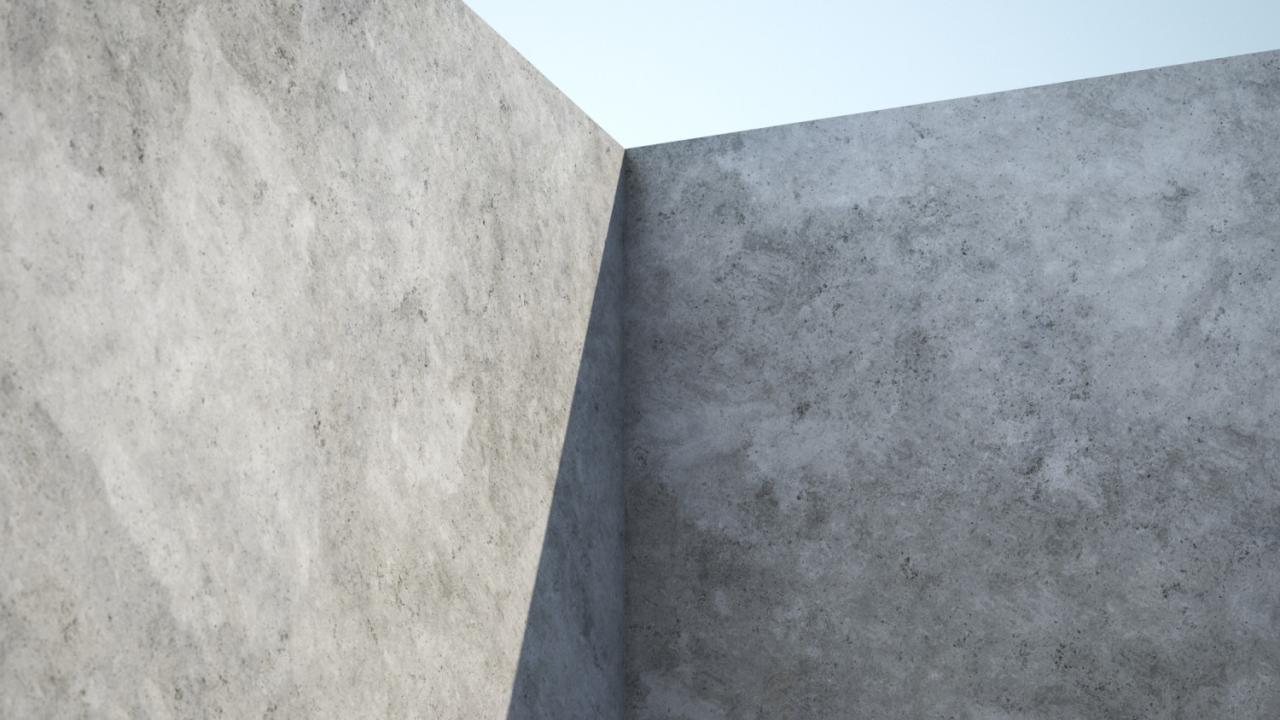
In an era dominated by virtual experiences and synthetic materials, there is a growing hunger for authenticity. Raw concrete offers an antidote to mass-produced, flawless surfaces. Its imperfections air pockets, subtle color variations, tool marks tell a story of craftsmanship and process. Homeowners and designers are increasingly valuing these “flaws” as evidence of the human hand.
B. The Biophilic Connection
Surprisingly, raw concrete can foster a connection to nature. When combined with natural light, organic textures, and living plants, concrete acts as a neutral anchor that grounds a space. Its thermal mass properties also contribute to passive heating and cooling, aligning with biophilic design principles that seek to harmonize human habitation with the natural environment.
C. Advances in Concrete Technology
Perhaps the most significant driver of concrete’s warmth is technological innovation. Engineers and material scientists have developed new formulations that expand the aesthetic and tactile possibilities of concrete. These include:
-
Pigmented Concrete: Integral colorants allow concrete to be cast in warm earth tones, soft terracottas, or muted ochres, moving beyond the standard gray.
-
Polished and Honed Finishes: Advanced grinding and sealing techniques create velvety, stone-like surfaces that invite touch rather than repel it.
-
Fiber-Reinforced Concrete: The addition of natural or synthetic fibers enables thinner, more elegant forms and reduces the need for heavy reinforcement.
-
Low-Carbon Alternatives: Innovations such as geopolymer concrete, carbon-cured concrete, and the use of supplementary cementitious materials like fly ash or slag are mitigating environmental concerns, making concrete more ethically acceptable.
Design Strategies for Infusing Warmth into Raw Concrete
Achieving warmth with raw concrete is not accidental; it requires deliberate design choices. Architects and interior designers employ a range of strategies to ensure that concrete spaces feel welcoming rather than sterile.
A. Texture and Formwork
The surface texture of concrete is determined largely by the formwork the molds into which it is poured. Traditionally, formwork was made of standard plywood, resulting in a monotonous, industrial grain. Today, designers experiment with:
-
Rough-sawn timber: Imparts a rustic, organic grain to the concrete.
-
Bamboo or reed mats: Create delicate, linear patterns.
-
Custom reliefs: Embedded designs or logos that personalize the surface.
These textural variations catch light and shadow, animating the surface and preventing monotony.
B. Curvilinear Forms
One of the most effective ways to soften concrete is to shape it into curves. Unlike the rigid, orthogonal forms of Brutalism, contemporary concrete architecture embraces fluidity. Curved walls, rounded corners, and vaulted ceilings reduce the perception of heaviness and create a sense of embrace. This approach is evident in works by architects like Tadao Ando and Zaha Hadid, who demonstrate that concrete can be as sinuous as silk.
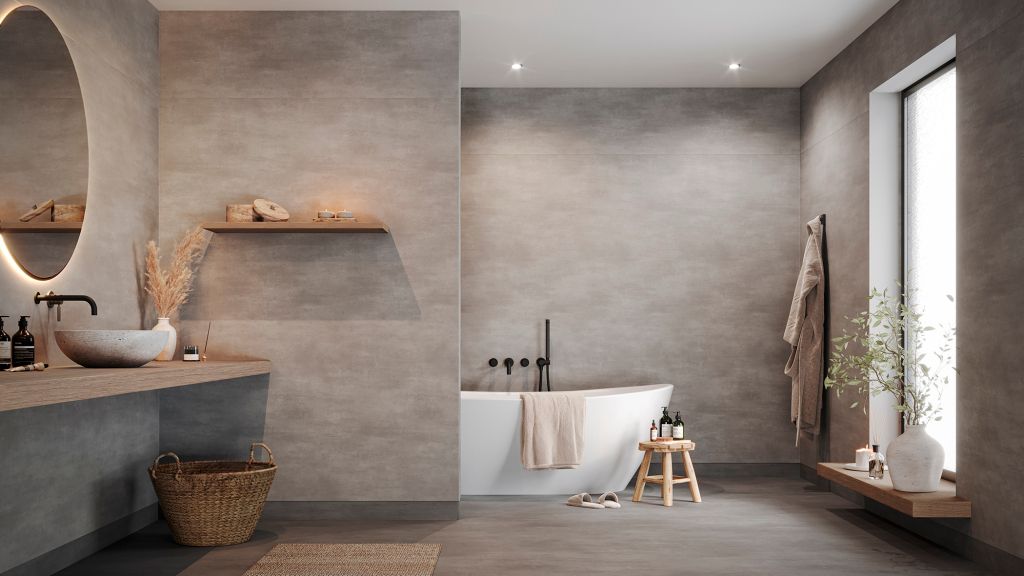
C. Material Pairing
Raw concrete achieves warmth most effectively when juxtaposed with contrasting materials. Common pairings include:
-
Warm Woods: Oak, walnut, or cedar introduce grain, color, and olfactory richness.
-
Soft Textiles: Linen, wool, and velvet add tactile softness and absorb sound.
-
Brass and Copper: These metals patina beautifully and introduce reflective warmth.
-
Living Elements: Moss walls, potted plants, or vertical gardens breathe life into concrete interiors.
D. Lighting as a Warmth Catalyst
Lighting is perhaps the most critical tool in transforming the perception of concrete. Direct, harsh lighting emphasizes coldness, while layered, diffuse illumination reveals warmth. Designers employ:
-
Uplighting: To accentuate ceiling height and create a glow.
-
Warm Color Temperatures: LEDs in the 2700K–3000K range cast a golden hue.
-
Shadow Niches: Recesses that capture shadow and add depth.
Case Studies: Concrete Warmth in Practice
To ground these principles in reality, let us examine several exemplary projects where raw concrete embraces warmth with remarkable success.
1. The Basel Pavilion, Switzerland (Herzog & de Meuron)
This temporary event space features precast concrete panels infused with iron oxide, lending them a warm pinkish hue. The panels are spaced with deliberate gaps, allowing light to seep through and soften the mass. Inside, untreated oak benches and wool felt curtains complete the sensory experience.
2. Casa Wabi, Mexico (Tadao Ando)
Tadao Ando is synonymous with poetic concrete. At Casa Wabi, his signature smooth concrete is contrasted with the tropical landscape of the Oaxacan coast. The concrete retains its gray tone, but its polished surface reflects the sky and surrounding palm trees, while the open-air corridors invite sea breezes. Warmth here is achieved not through color but through sensory immersion.
3. Private Residence, Melbourne (Edition Office)
In this Australian home, raw concrete floors are polished to a subtle sheen and paired with blackbutt timber ceilings. The concrete acts as a thermal battery, absorbing winter sun and releasing it slowly overnight. The architects left intentional “construction scars” on the walls marks of the formwork ties as a narrative of making.
The Psychological Dimension: Why We Now Find Concrete Warm
Our perception of materials is not fixed; it evolves with cultural context. Several psychological factors explain why raw concrete now reads as warm rather than cold.
A. Familiarity and Nostalgia
As the Brutalist buildings of the 1960s age, they acquire patina and historical weight. A new generation, with no memory of postwar austerity, views these structures with nostalgic affection. This phenomenon, sometimes called “Brutalist revival,” has desensitized the public to concrete’s perceived harshness.
B. The Wabi-Sabi Alignment
The Japanese aesthetic of wabi-sabi—finding beauty in imperfection, impermanence, and incompleteness resonates strongly with contemporary Western design sensibilities. Raw concrete, with its unpredictable curing patterns and subtle cracking, embodies these principles perfectly.
C. Material Honesty as Emotional Honesty
In a culture saturated with curated social media personas and digital filters, there is a craving for honesty. Raw concrete does not pretend to be something it is not. This transparency extends metaphorically to our living spaces; we seek environments that do not deceive us.
Environmental Considerations: Can Concrete Be Sustainable?
No discussion of raw concrete is complete without addressing its environmental footprint. While concrete is not inherently green, significant progress is being made.
A. Carbon Capture and Storage
Emerging technologies allow CO2 to be injected into fresh concrete, where it mineralizes and becomes permanently trapped. This not only sequesters carbon but also increases compressive strength.
B. Recycled Aggregates
Crushed concrete from demolished structures can replace virgin aggregate, reducing landfill waste and mining.
C. Longer Lifecycles
Concrete structures are extraordinarily durable. A well-designed concrete building can last over a century with minimal maintenance, offsetting its initial carbon investment over time.
D. Thermal Efficiency
As mentioned earlier, concrete’s thermal mass reduces heating and cooling loads. When combined with passive solar design, a concrete home can achieve significant energy savings.
Practical Considerations for Homeowners
If you are considering incorporating raw concrete into your own living space, there are several factors to weigh.
A. Acoustic Performance
Bare concrete reflects sound, creating echo and reverberation. To counter this, integrate acoustic panels, area rugs, upholstered furniture, or bookshelves.
B. Moisture Management
Concrete is porous. In basements or humid climates, proper sealing and vapor barriers are essential to prevent mustiness or efflorescence (white mineral deposits).
C. Underfloor Heating
Concrete’s thermal mass makes it an excellent conductor for radiant floor heating. This combination yields a luxurious, even warmth underfoot particularly appreciated in colder months.
D. Professional Expertise
Achieving high-quality exposed concrete requires experienced contractors. Mistakes in mixing, pouring, or curing are difficult to reverse. Invest in specialists familiar with architectural concrete finishes.
The Future of Warm Concrete
As we look ahead, the trajectory for raw concrete is one of continued refinement and acceptance.
A. Bio-Concrete
Researchers are developing self-healing concrete using bacteria that precipitate calcium carbonate. This living concrete could repair its own cracks, extending service life and reducing maintenance.
B. Translucent Concrete
Optical fibers embedded in concrete allow light to pass through, creating ethereal, luminous walls. While still niche, this technology could redefine concrete’s relationship with light and shadow.
C. 3D-Printed Concrete
Additive manufacturing enables complex, organic geometries that were previously impossible or prohibitively expensive. This freedom of form will further distance concrete from its rigid, boxy reputation.
Conclusion
Raw concrete has undergone a profound transformation from a symbol of soulless utilitarianism to a cherished medium of warmth, texture, and authenticity. This evolution is not a rejection of concrete’s nature but an embrace of its full potential. By integrating advances in material science, thoughtful design strategies, and a deeper understanding of human psychology, architects and homeowners alike are discovering that concrete can be as warm as wood, as soft as silk, and as honest as the earth itself.
The concrete of today is not the concrete of our parents. It is pigmented, polished, curved, and carbon-sequestering. It coexists with gardens, glows with warm light, and ages gracefully. As we continue to seek buildings that are sustainable, beautiful, and meaningful, raw concrete will undoubtedly remain at the forefront not in spite of its rawness, but because of it.