The architectural and design world stands at a fascinating crossroads as we approach 2026. The clean lines, functionalist ethos, and revolutionary spirit of the Modernist movement which dominated much of the 20th century are undergoing a profound transformation. Rather than being relegated to history books, Modernism is being reborn through contemporary lenses that honor its core principles while addressing 21st-century realities. This reimagining isn’t merely about nostalgia; it represents a sophisticated dialogue between past innovations and future necessities.
Understanding Modernism’s Enduring Blueprint
Modernism emerged as a radical departure from ornate Victorian aesthetics. Architects like Le Corbusier, Ludwig Mies van der Rohe, and Frank Lloyd Wright championed simplicity, honesty in materials, and the idea that form should follow function. Their philosophy stripped away decoration to reveal structure, celebrated industrial materials, and sought to create democratic spaces accessible to all.
The movement’s DNA contains several immutable characteristics that continue influencing contemporary practice. These include open floor plans, large glazed surfaces, minimal ornamentation, and the integration of indoor and outdoor spaces. However, the Modernist legacy also carried forward certain limitations rigid geometries that sometimes ignored human comfort, energy-inefficient glass facades, and a universal approach that occasionally overlooked cultural and contextual specificities.
What makes the 2026 reinterpretation particularly compelling is its refusal to treat Modernism as a fixed canon. Instead, contemporary practitioners are extracting principles while discarding dogmas, creating what might be called Neo-Modernism or Adaptive Modernism.
The Philosophical Foundations of Reimagined Modernism
A. Humanizing the Rational
The original Modernists believed that rational design could create better societies. While this conviction remains valuable, the 2026 approach recognizes that rationality without emotional resonance produces sterile environments. Today’s designers are softening Modernism’s hard edges literally and figuratively.
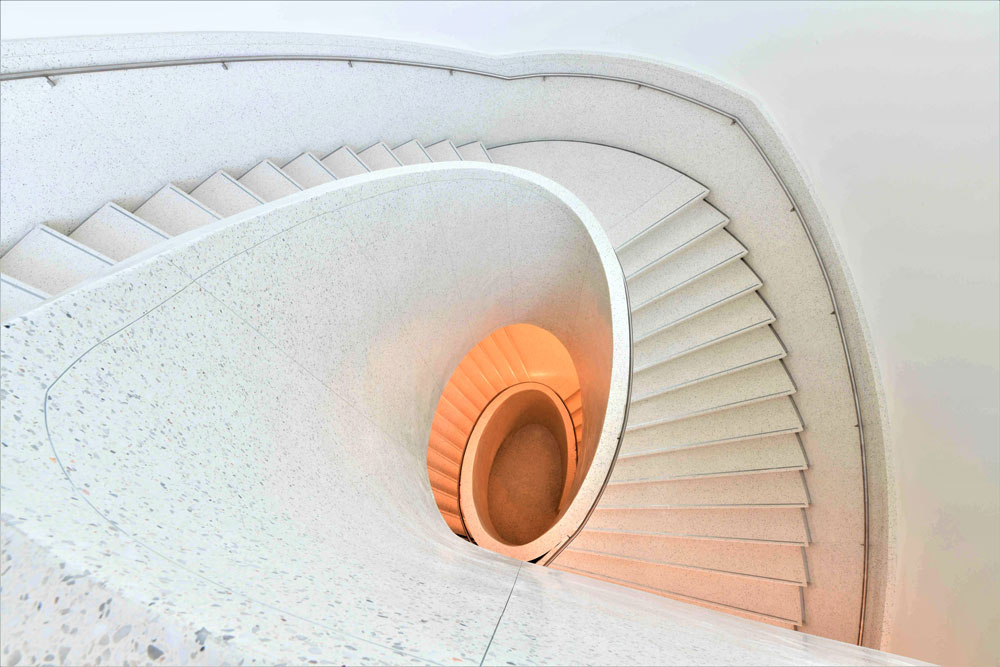
Curved walls are replacing rigid orthogonal grids in many contemporary projects. Warm wood tones and textured textiles are being layered onto concrete and steel skeletons. This isn’t a rejection of Modernist principles but rather their evolution. The function of a space now includes psychological comfort, not merely physical utility.
B. Sustainability as the New Functionalism
If “form follows function” was Modernism’s mantra, then “form follows ecology” might define its 2026 incarnation. The original movement embraced industrial progress without fully anticipating its environmental consequences. Today’s reinterpretation places ecological responsibility at the center of design philosophy.
Passive solar strategies are being integrated into sleek Modernist volumes. Green roofs transform minimalist horizontality into living ecosystems. Rainwater harvesting systems are concealed within elegant structural elements. The function of architecture now includes planetary stewardship, and this expanded definition of utility is reshaping Modernist forms from within.
C. Material Authenticity Reconsidered
Modernism celebrated truth in materials exposed concrete, revealed steel connections, unadorned glass. The 2026 interpretation maintains this honesty while broadening the material palette significantly.
Bioplastics derived from algae, mycelium composites, and recycled demolition waste are becoming the new honest materials. Their authenticity lies not in industrial production but in ecological intelligence. Cross-laminated timber offers the structural expressiveness that steel once provided, with a fraction of the carbon footprint. These materials tell truthful stories about their origins and destinies, extending Modernist honesty beyond fabrication into full lifecycle thinking.
Key Characteristics of Modernist Legacy Reimagined for 2026
1. Simplified Volumes with Biophilic Integration
The clean geometric forms remain, but they now incorporate living walls, integrated planters, and biomorphic elements. Architecture breathes literally and figuratively.
2. Transparent Boundaries Reconfigured
Floor-to-ceiling glass persists but with dynamic solar responsiveness. Electrochromic glazing replaces static transparency, maintaining visual connection while managing thermal performance.
3. Structural Expression Through Low-Carbon Materials
The exposed structure ethos continues, but mass timber and bamboo composites now express building logic rather than steel or concrete exclusively.
4. Monochromatic Palettes Accented by Biophilia
White walls and neutral backgrounds honor Modernist minimalism, now punctuated by intentional vegetation and sustainable material textures rather than decorative objects.
5. Flexible Floor Plans for Uncertain Futures
Open plans gain new relevance through movable partitions and adaptive furniture systems, responding to how work, living, and socializing continue merging.
6. Industrial Aesthetics Softened by Craft
Factory-produced components are complemented by visible handcraft, acknowledging that precision and human touch need not be mutually exclusive.
7. Light as Material Rather Than Afterthought
Natural light manipulation becomes primary structural consideration, with light scoops, reflection pools, and prismatic elements functioning as integral design components.
8. Contextual Sensitivity Over Universal Solutions
Regional interpretations replace one-size-fits-all approaches, acknowledging that Modernist principles manifest differently in tropical, arid, and temperate climates.
Technological Integration Without Technological Exhibitionism
The 2026 reimagining approaches technology with characteristic Modernist restraint. Smart home systems disappear into walls rather than announcing themselves through visible interfaces. Building automation prioritizes passive strategies before engaging active systems. The goal is intelligence without intrusion.
This represents a maturation of early 21st-century tendencies toward technological exhibitionism. Instead of showcasing digital capabilities, sophisticated projects now embed sensors, adaptive systems, and responsive elements within minimalist envelopes. The technology serves comfort and efficiency without becoming decorative or distracting.
The Resurgence of Modernist Landscapes
Modernism’s relationship with nature was often paradoxical celebrating views while treating landscape as pictorial backdrop. The 2026 interpretation integrates exterior and interior as ecological equals, not visual commodities.
Native plantings replace manicured lawns around Modernist residences. Productive gardens occupy spaces previously reserved for abstract sculpture. Stormwater management becomes visible landscape feature rather than buried infrastructure. These shifts acknowledge that Modernism’s indoor-outdoor connection must function ecologically, not merely optically.
Case Studies in Contemporary Modernist Reinterpretation
The Adaptive Villa, Southern California
A 1962 Modernist residence underwent transformation that preserved its core geometry while replacing all glazing with high-performance assemblies. Photovoltaic panels integrate into roof planes without disturbing proportion. The original travertine flooring remains, now heated geothermally. This project demonstrates that Modernism’s physical legacy can achieve contemporary performance without cosmetic alteration.
Tokyo Vertical Village
Multiple stacked volumes reference the Metabolist movement while addressing urban density through mass timber construction. Shared sky gardens replace individual balconies, fostering community while maintaining clean exterior lines. The project reinterprets Modernist horizontality for vertical urban contexts.
Copenhagen Library Renovation
A 1970s brutalist library received new life through strategic subtraction rather than addition. Removing select concrete panels introduced daylight while revealing original structural logic. New furnishings reference Danish Modern heritage but utilize ocean-recovered plastics. The building remained operational throughout transformation, proving that Modernist structures can evolve continuously rather than requiring periodic replacement.
Color and Materiality: The Quiet Revolution
While orthodox Modernism often restricted color to primaries applied on select surfaces, the 2026 approach introduces chromatic subtlety derived from natural pigments and sustainable sources.
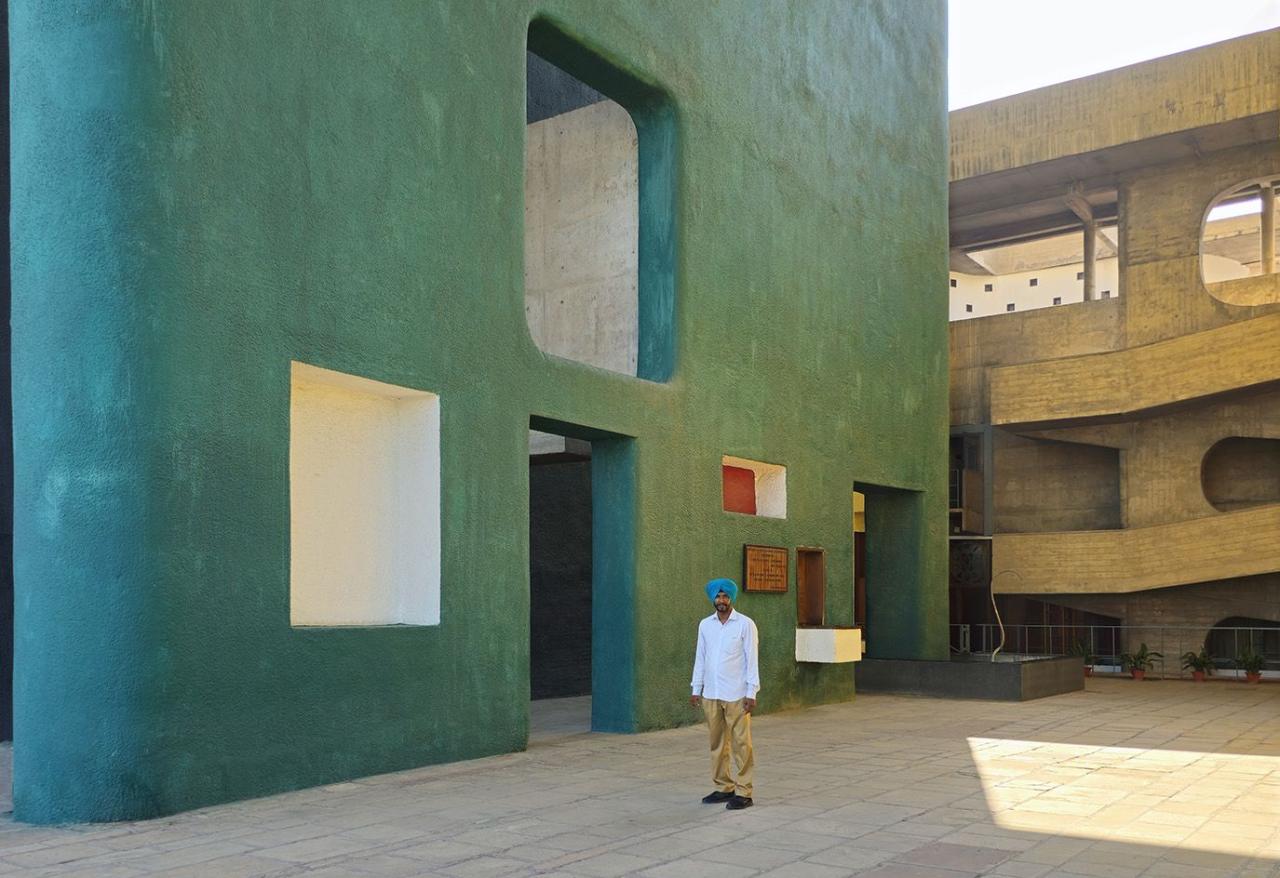
Earthy ochres, muted terracottas, and deep forest greens are appearing on exterior surfaces typically reserved for white or gray. These colors emerge from material properties rather than applied finishes pigmented concrete, naturally colored plasters, and thermally modified woods. The result maintains Modernist honesty while expanding emotional range.
Social Equity and the Modernist Promise
Early Modernism carried progressive social intentions that were incompletely realized. Housing projects designed to elevate living standards sometimes became instruments of segregation through inadequate funding and maintenance. The 2026 reimagining confronts this legacy directly.
Contemporary practitioners are applying Modernist principles of efficiency and honesty to affordable housing, workforce communities, and inclusive developments. Prefabrication strategies first explored by Jean Prouvé and Buckminster Fuller are being refined through digital fabrication and equitable development models. The social promise of Modernism quality design available to all finds renewed relevance through these efforts.
The Global Conversation
Modernism’s 2026 incarnation is genuinely pluralistic. Architects in West Africa reinterpret Le Corbusier’s brise-soleil through contemporary perforated metal screens reflecting regional patterns. South American practitioners adapt Miesian pavilions to humid climates through cross-ventilation strategies invisible from exterior elevations. Southeast Asian designers apply the structural logic of traditional timber construction within Modernist volumes.
This global diffusion differs from Modernism’s original spread, which often imposed Western solutions onto non-Western contexts. Today’s exchange operates multidirectionally, with insights from the Global South informing Northern Hemisphere practice. The result is a Modernism that achieves universality through diversity rather than uniformity.
Challenges and Criticisms
Not everyone embraces Modernism’s persistence. Critics argue that revisiting any early 20th-century movement risks aesthetic conservatism during an era demanding radical responses. Some contend that sustainability concerns should completely transform architectural language rather than adapt existing vocabularies.
These critiques contain validity. The 2026 reimagining must avoid becoming merely stylistic, adopting Modernist appearance without Modernist conviction. Authentic reinterpretation requires engaging with underlying principles efficiency, honesty, social purpose not merely reproducing white walls and pilotis.
Education and the Next Generation
Architectural education reflects this reimagined Modernism. Design studios now pair Mies van der Rohe’s Farnsworth House with Passivhaus certification requirements. Students analyze how Le Corbusier’s ventilation strategies might inform pandemic-resilient design. History courses examine Modernism’s colonial dimensions alongside its formal innovations.
This pedagogical evolution ensures that emerging practitioners understand Modernism as living tradition rather than closed chapter. They approach precedent critically, extracting what remains useful while identifying what must be left behind.
The Commercial Realm
Corporate architecture continues referencing Modernist archetypes but with transformed performance expectations. The glass curtain wall persists but now generates energy through integrated photovoltaics. Open office plans honor the modernist commitment to flexible space while incorporating biophilic elements supporting cognitive function. Speculative development increasingly embraces Modernist simplicity because it adapts readily to changing tenant requirements over decades-long building lives.
Preservation and Transformation
A significant dimension of the 2026 reimagining involves existing Modernist structures themselves. These buildings now qualify for preservation consideration, yet their performance often falls below contemporary standards. The response involves strategic intervention upgrading thermal envelopes while preserving characteristic glazing, adding mechanical systems without compromising exposed structure, introducing contemporary programs within original volumes.
This preservation-adaptation balance requires nuanced judgment. Complete museumification ignores Modernism’s inherently progressive character. Wholesale replacement wastes embedded carbon and cultural memory. Successful approaches treat Modernist buildings as ongoing projects rather than completed artifacts.
The Philosophical Continuity
Despite significant evolution, certain Modernist convictions remain non-negotiable in 2026. The belief that design improves human experience persists. The commitment to honesty over pretense continues. The insistence that architecture should serve many rather than few endures.
These philosophical continuities distinguish genuine reinterpretation from superficial appropriation. When contemporary designers strip away ornament not for stylistic effect but to reveal authentic structure and material behavior, they operate within Modernism’s ethical framework. When they prioritize occupant wellbeing alongside aesthetic expression, they extend rather than abandon the movement’s humanistic intentions.
Conclusion: The Unfinished Project
Modernism was never intended as fixed style but as continuing project a method for addressing contemporary conditions through rational, honest, socially engaged design. The 2026 reimagining understands itself within this tradition, applying Modernist methods to conditions its originators could not have anticipated.
Climate emergency, digital ubiquity, global interconnection, and unprecedented urban density demand responses informed by Modernism’s rigor but not constrained by its limitations. The movement’s legacy remains vital precisely because it was never completed. Each generation receives Modernism as unfinished business, inheriting its questions along with its answers.
The most compelling work of 2026 and beyond will neither worship Modernist precedent nor reject it entirely. Instead, it will maintain critical continuity honoring what remains essential while releasing what has become obsolete. This dialectical relationship with history characterizes living traditions, and Modernism proves itself alive through precisely such transformative fidelity.
The white walls continue, but they now incorporate recycled content and advanced thermal performance. The open plans remain, but they accommodate transformed patterns of domestic and professional life. The indoor-outdoor connection persists, but it operates within ecological constraints and opportunities.
Modernism reimagined for 2026 is simultaneously recognizable and transformed familiar in its fundamental commitments, unfamiliar in their contemporary expression. This is not the betrayal of legacy but its fulfillment. The movement that once proclaimed its timelessness now demonstrates its timeliness through continuous reinvention.