
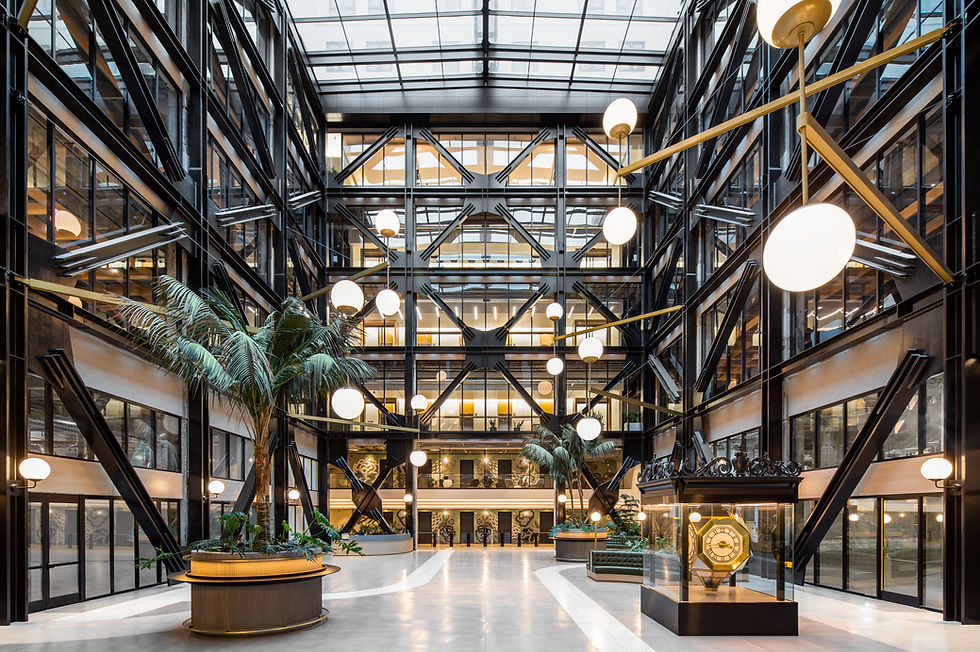
The architectural and real estate industries are currently facing a crucial crossroads. For decades, the default response to the need for more space whether for housing, offices, or cultural institutions has been to demolish the old and build anew. However, a powerful counter-movement is gaining momentum, championing a philosophy that is as economically prudent as it is environmentally essential: adaptive reuse.
This strategy, which involves repurposing existing buildings for new functions, is no longer just a niche practice for preserving historic landmarks. It has evolved into a mainstream development model that offers superior returns, significant sustainability benefits, and profound community value. While the allure of a blank slate and ground-up construction remains strong, a thorough analysis of the current global climate, material costs, and urban needs reveals that adaptive reuse is not merely a trend it is the future of responsible development.
The Fundamental Shift in Development Philosophy
To understand why adaptive reuse is overtaking new construction, we must first dismantle the traditional bias that “new” is inherently better. For much of the 20th century, North America and Europe operated under a culture of “creative destruction.” If a factory closed or a department store went bankrupt, the solution was almost always the wrecking ball.
This mindset, however, is becoming economically untenable. We are entering an era defined by high material costs, supply chain volatility, and stringent carbon regulations. Adaptive reuse operates on a different set of principles. Instead of viewing an abandoned post office or a derelict warehouse as an obstacle, developers are learning to see it as a pre-assembled kit of parts a structure that already possesses embodied value.
A. The Economic Superiority of Existing Structures
Contrary to the outdated belief that building from scratch is cheaper, contemporary financial modeling often favors adaptation. While renovation can carry uncertainty regarding hidden conditions (such as asbestos or outdated wiring), the cost certainty of new builds is frequently shattered by external factors.
1. Accelerated Timelines and Revenue Generation
One of the most compelling arguments for reuse is time. New construction projects, particularly in dense urban environments, face extensive permitting processes, environmental impact reviews, and community board hearings. These can delay a groundbreaking for years. Adaptive reuse projects often benefit from existing zoning designations and utility hookups. A building that is structurally sound can be retrofitted and leased in half the time it takes to pour foundations and erect steel. In commercial real estate, time is money; faster occupancy translates directly to improved internal rates of return (IRR).
2. Mitigation of Material Price Volatility
The COVID-19 pandemic exposed the fragility of global supply chains. Lumber, steel, and concrete prices experienced unprecedented fluctuations, wiping out profit margins on new construction projects. Adaptive reuse drastically reduces the quantity of virgin materials required. By retaining the core, superstructure, and envelope of a building, developers insulate themselves from the whims of the commodity markets.
3. Tax Incentives and Grants
Governments at the federal, state, and local levels are increasingly disincentivizing demolition and incentivizing preservation. Historic Tax Credits (HTCs) in the United States, for example, can cover 20% of qualified rehabilitation expenses. Similar programs exist throughout Europe and Asia. These financial tools are rarely available for ground-up projects, effectively subsidizing the adaptive reuse model and making it more profitable on paper than greenfield development.
B. The Environmental Imperative: Embodied Carbon
Perhaps the most significant advantage of adaptive reuse lies in its environmental impact. The construction industry is responsible for nearly 40% of global energy-related CO2 emissions. Within this sector, the concept of embodied carbon has become the central metric for sustainability.
1. The Cost of Demolition
When we demolish a building, we commit a double crime against the environment. First, we generate massive amounts of waste concrete, drywall, and metals that often end up in landfills. Second, we expend massive energy to create new materials to replace what we just threw away. Adaptive reuse avoids this entirely. By retaining the existing structure, we preserve the carbon that was already emitted to create that building. It is, effectively, a form of carbon banking.
2. Operational Efficiency Upgrades
Critics of adaptive reuse often argue that old buildings are “leaky” and inefficient. While this was once true, modern retrofitting techniques have rendered this argument obsolete. Deep energy retrofits can install high-performance glazing, green roofs, geothermal HVAC systems, and solar cladding onto historic facades. A building constructed in 1920 can achieve net-zero carbon status through sensitive mechanical upgrades. It is far more sustainable to upgrade an existing envelope than to manufacture and ship a new one from across the globe.
C. Social and Cultural Capital
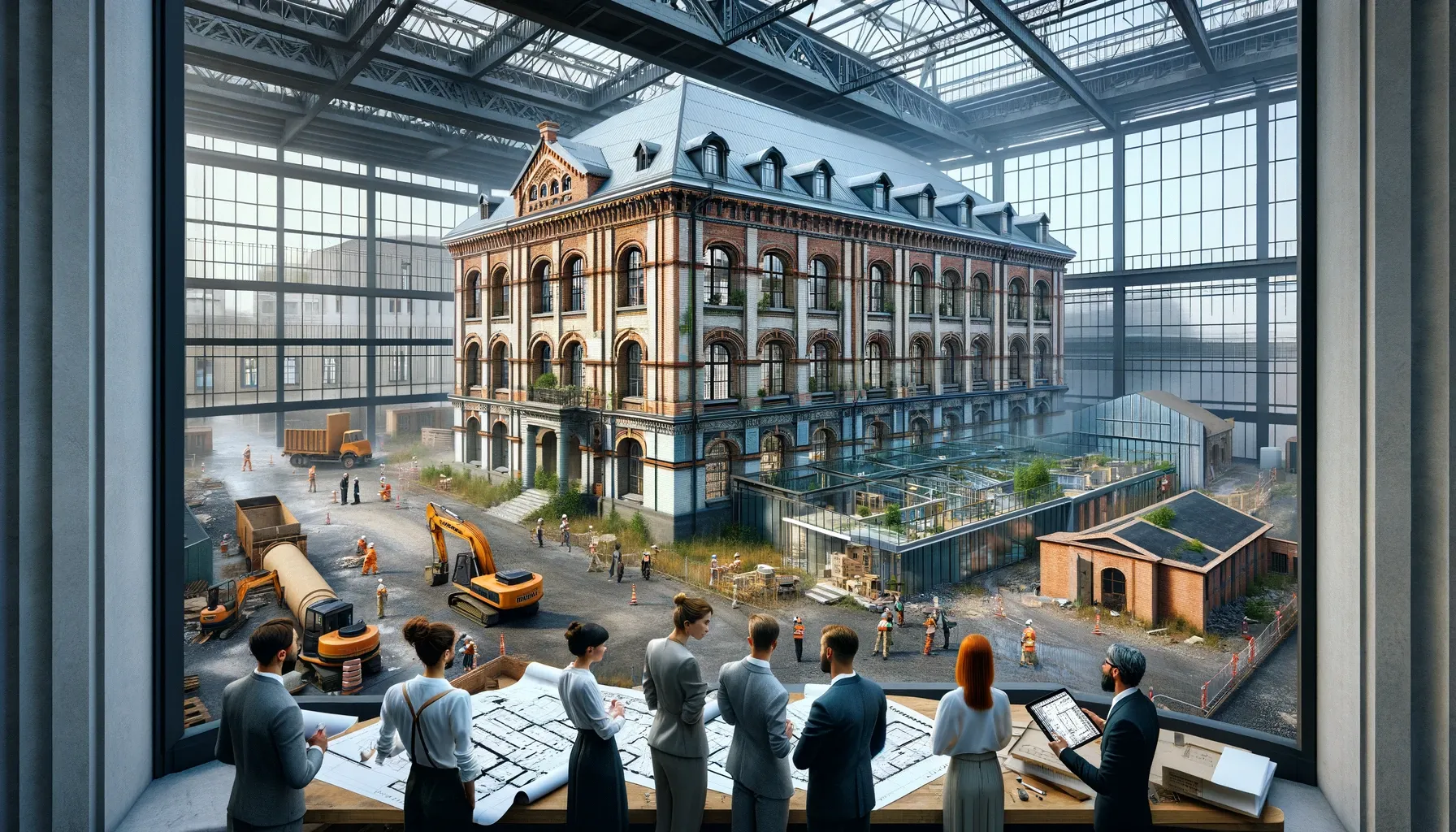
Real estate development does not occur in a vacuum. Buildings are the vessels of our collective memory. When a community loses a landmark even one that is not officially “historic” it loses a piece of its identity.
1. Preserving the Urban Fabric
New construction, particularly large-scale master-planned communities, often feels sterile and disconnected from its surroundings. Adaptive reuse projects, by their very nature, fit within the existing scale and rhythm of a neighborhood. A textile mill converted into loft apartments retains the industrial character that defines a city’s heritage. This authenticity is a commodity that cannot be manufactured; it must be inherited.
2. Combating Urban Blight
Vacant and abandoned buildings are more than just eyesores; they are catalysts for crime and depressed property values. Adaptive reuse acts as a surgical intervention. By reactivating a dormant structure, developers inject foot traffic, retail spending, and safety into neglected corridors. This “win effect” raises the tide for all surrounding properties without necessitating the wholesale clearance of existing communities.
D. Architectural Innovation Through Constraint
There is a common misconception that architects have more freedom with a new building than with an existing one. In reality, constraints breed creativity. Adaptive reuse forces designers to engage with history, odd geometries, and unique material palettes.
1. The Beauty of the “Palimpsest”
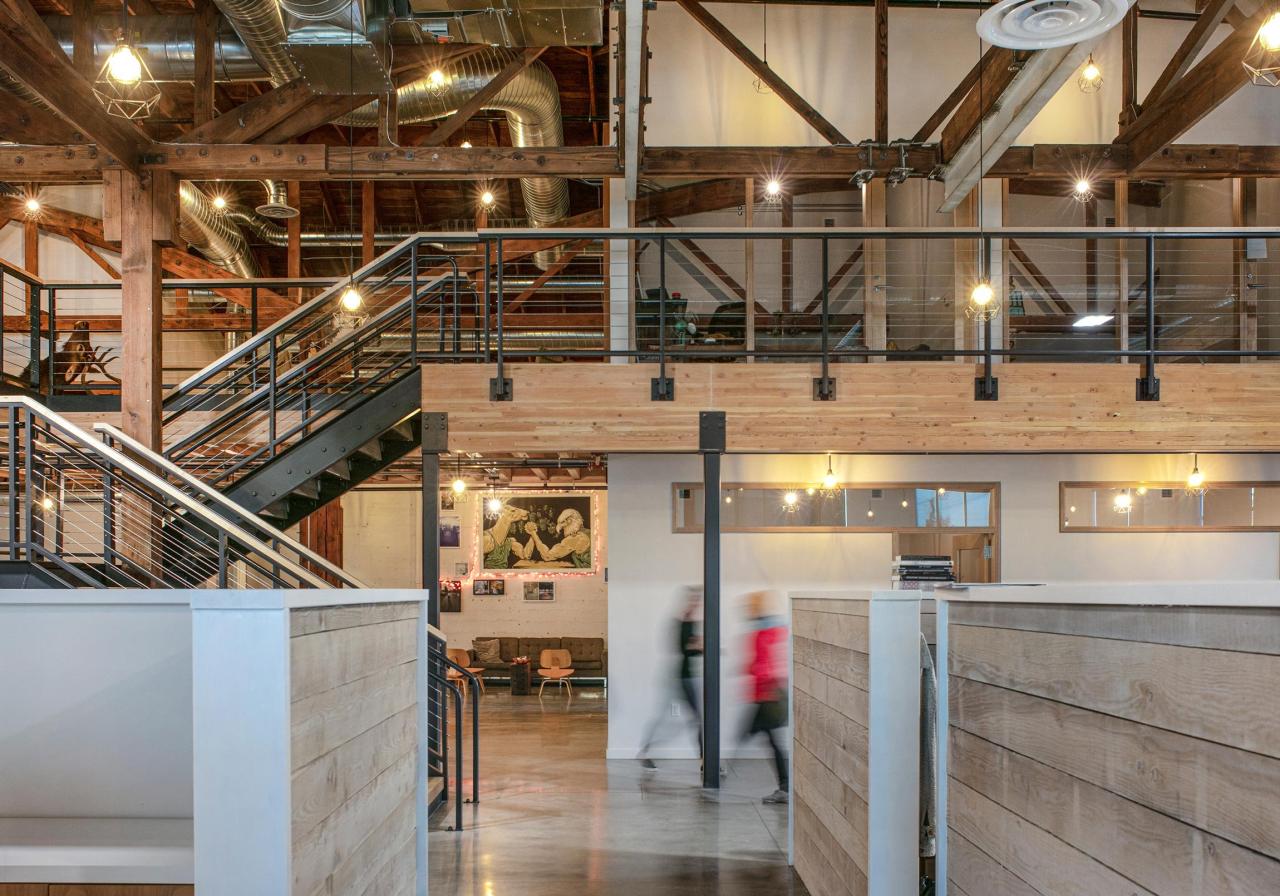
The most celebrated architectural projects of the past decade are not glass boxes; they are interventions within ruins. Architects are embracing the concept of the “palimpsest” a building that reveals its layers of history. Exposed brick, heavy timber beams, and original trusswork are now desirable amenities. Tenants and buyers are willing to pay a premium for spaces that tell a story. This “industrial chic” aesthetic is nearly impossible to replicate authentically in new construction; attempts to do so often result in faux finishes that lack soul.
2. Programmatic Juxtaposition
Adaptive reuse allows for exciting programmatic collisions. A brutalist parking garage becomes a high-tech office. A church becomes a bookstore or a brewery. These juxtapositions create destinations. They offer experiences that a standard retail strip mall cannot provide.
E. Addressing the Housing Crisis
Across the United States, Canada, and the United Kingdom, the cry for more housing has reached a fever pitch. While upzoning and new development are part of the solution, adaptive reuse offers the fastest path to density.
1. Office-to-Residential Conversions
The shift to remote work has left central business districts with record-high vacancy rates. Simultaneously, cities are desperate for affordable housing. The solution lies in converting obsolete Class B and Class C office towers into residential units. While these conversions are technically complex (dealing with core depths and window placements), they are often more feasible than demolition and rebuilding. Cities like Calgary and New York are actively revising zoning codes and offering tax abatements specifically to facilitate these conversions.
2. “Malling the Mall”
The death of the American indoor mall has created a stock of massive, single-story retail boxes surrounded by seas of asphalt. Developers are now “demalling” breaking down these big boxes into mixed-use neighborhoods. By retaining the structural frames of former department stores, developers can insert apartments, medical offices, and even schools, creating instant communities with existing infrastructure.
F. Challenges and Strategic Solutions
No development strategy is without its pitfalls. Adaptive reuse requires a specific skillset that differs from ground-up construction.
1. The Unknown Factor
The greatest risk in renovation is the unknown. Walls must be opened, and soils must be tested. To mitigate this, successful developers invest heavily in pre-development due diligence. Engaging structural engineers and hazardous material consultants before acquisition is not an expense; it is an insurance policy.
2. Zoning Hurdles
An old factory is rarely zoned for the residential lofts a developer envisions. However, the tide of public policy is shifting. Cities are realizing that strict, single-use zoning is a relic of the past. Many municipalities now offer “by-right” conversions for certain building types, expediting the approval process for projects that increase density without expanding the urban footprint.
G. The Future: A Circular Economy
Looking ahead, adaptive reuse is the cornerstone of the circular economy in construction. The linear model of “take, make, dispose” is dying. In its place, we are moving toward a system where buildings are viewed as material banks.
In the future, contracts for new construction may require architects to design for deconstruction rather than demolition. However, until that future arrives, our best strategy is preservation. Every building we save today is a resource we conserve for tomorrow.
Conclusion
The debate between adaptive reuse and new construction is not a battle between old and new. It is a battle between waste and wisdom. New construction will always have its place; we will always need to build hospitals, transit hubs, and truly unprecedented structures. However, for the vast majority of urban development needs, the existing building stock represents our greatest untapped asset.
Adaptive reuse is harder. It requires patience, creativity, and a tolerance for ambiguity. But the rewards financial, environmental, and social are exponentially greater. It allows us to honor the labor of those who built our cities while providing the spaces needed for future generations. It is not just a smart investment; it is a moral imperative for the sustainable century ahead.