
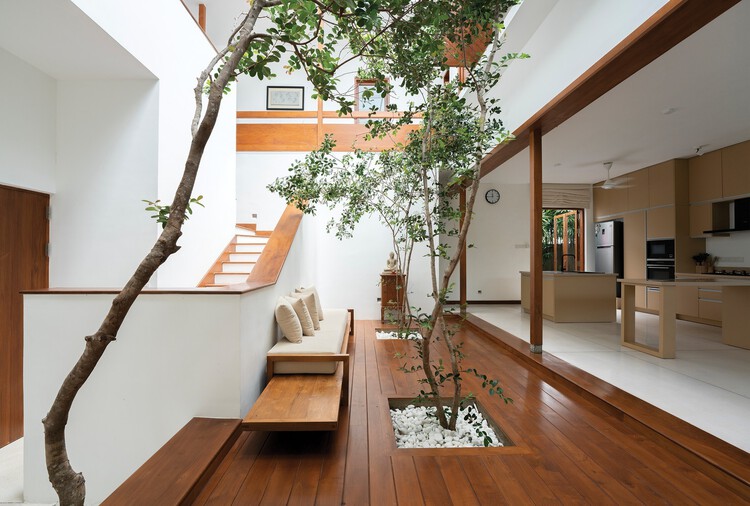
The intersection of neuroscience and architectural design has given birth to one of the most revolutionary movements in modern construction and interior planning. Neuroarchitecture, an emerging multidisciplinary field, examines how built environments influence cognitive function, emotional well-being, and physiological responses. By translating brain research into tangible design principles, architects and neuroscientists are collaborating to create spaces that do more than shelter they actively enhance human potential.
Understanding the Foundations of Neuroarchitecture
Neuroarchitecture operates on a fundamental premise that seems almost intuitive once stated: our surroundings physically alter our brains. For decades, architects relied on aesthetic intuition and cultural conventions when designing buildings. Today, empirical evidence from cognitive neuroscience provides concrete data about how specific spatial characteristics trigger neural responses.
The human brain did not evolve in rectangular rooms with fluorescent lighting. Our neural architecture developed over millions of years in natural environments characterized by particular patterns, lighting conditions, and spatial configurations. When modern environments deviate sharply from these evolutionary expectations, our brains register stress, even if we remain consciously unaware.
Functional magnetic resonance imaging studies reveal that navigating through poorly designed spaces activates the amygdala the brain’s threat detection center while well-conceived environments stimulate the hippocampus and prefrontal cortex, regions associated with memory consolidation and complex decision-making. This neurological evidence transforms design from an artistic endeavor into a health intervention.
The Biological Mechanisms Behind Spatial Perception
A. Sensory Processing and Environmental Cues
Human beings perceive space through multiple sensory channels operating simultaneously. Visual input dominates, but auditory feedback, olfactory information, tactile sensations, and proprioceptive awareness collectively inform our spatial experience. Neuroarchitecture addresses each of these channels deliberately.
The visual system processes geometric patterns, color wavelengths, and luminance gradients within milliseconds. Certain visual configurations consistently reduce cognitive load. Spaces exhibiting fractal patterns similar to those found in nature trees branching, coastlines meandering, clouds forming trigger parasympathetic nervous system activation. Heart rate slows, cortisol levels decrease, and attention restoration begins.
B. The Hippocampal Cognitive Map
The hippocampus contains specialized neurons called place cells that fire when an individual occupies specific locations. Another set, grid cells, create a coordinate system for spatial navigation. Together, these neural populations construct cognitive maps that enable wayfinding and spatial memory.
When architectural layouts feature clear landmarks, intuitive circulation patterns, and differentiated zones, the hippocampus constructs accurate cognitive maps efficiently. Conversely, monotonous corridors, identical floor plates, and ambiguous transitions force continuous hippocampal overactivation, producing mental fatigue even before physical tiredness sets in.
C. Stress Response Modulation
The hypothalamic-pituitary-adrenal axis responds to environmental stressors through cortisol secretion. Neuroarchitectural research has identified specific spatial stressors: low ceilings combined with high occupant density, insufficient visual access to exits, unpredictable noise patterns, and inadequate personal space delineation.
By measuring galvanic skin response and heart rate variability among building occupants, researchers can quantify stress reduction achieved through design modifications. A hospital waiting room with nature views produces measurably lower physiological stress markers than an identical room facing an interior courtyard.
Historical Antecedents and Contemporary Evolution
Although neuroarchitecture employs twenty-first-century neuroimaging technology, its conceptual roots extend deep into architectural history. Vitruvius, the Roman architect and engineer, emphasized that buildings must satisfy three criteria: firmitas (durability), utilitas (utility), and venustas (beauty). Contemporary neuroscience validates venustas as more than aesthetic indulgence beautiful environments genuinely support neurological health.
Christopher Alexander’s pattern language movement in the 1970s anticipated many neuroarchitectural principles. Alexander documented recurring spatial configurations that consistently generated positive affect across cultures. His “light on two sides” pattern, recommending that rooms receive daylight from multiple directions, anticipated research on circadian rhythm regulation through architectural means.
The term neuroarchitecture itself emerged during the early 2000s when the American Academy of Neuroscience and Architecture established formal research collaborations. Since then, the field has progressed from theoretical speculation to evidence-based practice, with peer-reviewed journals now publishing controlled experiments on spatial effects.
Key Design Parameters With Measurable Neurological Impact
A. Ceiling Height and Cognitive Processing
Research conducted at the University of Minnesota demonstrated that ceiling height influences cognitive processing style. High ceilings activate abstract, exploratory thinking participants solved word association problems more creatively in rooms with fifteen-foot ceilings. Low ceilings promoted focused, detail-oriented cognition, benefiting tasks requiring sustained attention to specifics.
This finding carries significant implications for building typology. Research facilities might combine soaring atrium spaces for interdisciplinary brainstorming with lower-ceilinged laboratories requiring meticulous technique application. Schools could alternate between tall-windowed classrooms for conceptual subjects and modestly proportioned rooms for computational work.
B. Circadian Lighting Integration
The intrinsically photosensitive retinal ganglion cells, discovered only in the 1990s, do not contribute to visual image formation. Instead, these specialized photoreceptors communicate directly with the suprachiasmatic nucleus the brain’s master clock regulating melatonin secretion, cortisol rhythms, and sleep-wake cycles.
Neuroarchitectural lighting design transcends illumination levels to address spectral power distribution and temporal light modulation. Dynamic lighting systems that shift color temperature throughout the day, delivering high-cerulean light during morning hours and amber wavelengths toward evening, support circadian entrainment. Office workers with circadian lighting report improved sleep efficiency and reduced daytime sleepiness.
C. Acoustic Zoning and Auditory Privacy
Open-plan offices emerged from collaborative ideals but generated unintended neurological consequences. Continuous exposure to intelligible but irrelevant speech fragments degrades cognitive performance because the brain cannot inhibit processing of linguistic content. Functional MRI reveals that background speech activates language areas involuntarily, competing with task-related neural activity.
Neuroarchitectural acoustic strategies employ sound masking systems emitting pink noise, strategic placement of absorptive materials, and spatial sequencing that transitions gradually from quiet zones to conversation areas rather than abrupt adjacencies.
D. Biophilic Integration
Biophilic design extends beyond placing potted plants in corners. True biophilic neuroarchitecture incorporates evolutionary habitat preferences through multiple mechanisms: visual connections to living organisms, non-visual sensory engagement with natural elements, biomorphic forms and patterns, and spatial configurations resembling sheltered refuges adjacent to open prospect.
Healthcare facilities incorporating comprehensive biophilic strategies demonstrate accelerated post-operative recovery, reduced analgesic requirements, and shorter hospital stays. These outcomes reflect genuine neurological mechanisms rather than placebo effects skin conductance and EEG alpha wave activity correlate predictably with biophilic content.
E. Complexity and Order Balance
Environments that are either excessively simple or chaotically complex both produce neural discomfort. Order without variety induces boredom and stimulus-seeking behavior; variety without order generates cognitive overload and anxiety.
The neural mechanism involves the default mode network and executive control network coordination. Environments achieving optimal complexity-ordering balance allow the brain to disengage from effortful environmental monitoring while remaining sufficiently stimulated to maintain alertness. This Goldilocks principle manifests in facade designs incorporating repetitive structural elements with localized variations, interior spaces featuring consistent material palettes with contrasting accents, and landscapes balancing openness with enclosure.
Application Across Building Typologies
Healthcare Environments
Medical facilities present compelling neuroarchitectural opportunities because patients occupy heightened emotional states. The neuroscience-informed hospital recognizes that waiting generates measurable physiological stress. Rather than merely providing seating, neuroarchitectural waiting areas offer positive distractions aquatic installations, dynamic art, garden views that occupy attention circuits otherwise engaged by pain anticipation.
Patient rooms designed with headwalls positioned to allow bed orientation toward windows rather than doors reduce delirium incidence among intensive care patients. When patients visually apprehend the room entrance without head rotation, the amygdala receives reduced threat signals, permitting deeper rest.
Educational Facilities
Learning environments have traditionally prioritized durability and economy over neurological optimization. Neuroarchitectural classrooms calibrate stimulation levels for developing brains. Excessive visual clutter on walls interferes with selective attention in young children whose inhibitory neural circuits remain immature.
Acoustic treatment proves critical for language acquisition. Children learning to discriminate phonemes require favorable signal-to-noise ratios that carpeting, acoustic ceiling tiles, and mechanical system isolation provide. Schools incorporating these features demonstrate reduced voice strain among teachers and improved reading comprehension scores.
Workplace Environments
Knowledge economy organizations increasingly recognize neuroarchitecture as competitive infrastructure. The contemporary workplace must accommodate diverse cognitive tasks requiring different environmental conditions. Deep focus work benefits from enclosure and predictability; collaborative innovation thrives in spaces with incidental encounter opportunities; social bonding requires comfortable settings supporting prolonged conversation.
Neuroarchitectural offices incorporate activity-based working models with distinct zones calibrated for specific cognitive modes. Transition spaces between zones corridors, stairwells, atria receive particular attention as innovation incubators where cross-disciplinary encounters naturally occur.
Residential Architecture
Homes represent the most personally significant environments humans occupy. Neuroarchitectural residences prioritize restoration and autonomy. Spatial sequences that graduate from public to private zones support psychological boundary regulation. Visual access to exterior green space correlates with emotional regulation capacity among residents of all ages.
Kitchen design influences nutritional behavior refrigerator contents visible through transparent doors increases vegetable consumption; countertop organization affects impulse control around processed foods. These subtle environmental influences operate below conscious awareness but aggregate into significant health outcomes.
Research Methodologies in Neuroarchitecture

Contemporary neuroarchitectural research employs converging methodologies to establish causal relationships between space and brain function. Virtual reality environments allow parametric manipulation of individual variables while maintaining others constant ceiling height varies while materials, lighting, and furnishings remain identical enabling isolation of specific spatial parameters.
Mobile electroencephalography permits brain activity measurement as participants navigate actual buildings. Dry electrode technology enables comfortable cap wearing during walking, with synchronized eye tracking revealing precisely which environmental features trigger neural responses. Participants remain unaware of specific hypotheses, eliminating expectation effects.
Galvanic skin response sensors worn on wrists continuously measure sympathetic nervous system activation throughout daily building occupation. Aggregated data from dozens of occupants reveals spatial stress hot spots and restoration zones invisible to casual observation.
Challenges and Criticisms
Neuroarchitecture faces legitimate scholarly critique. Some neuroscientists caution against overinterpreting preliminary findings, noting that fMRI correlates of emotional states remain inferential. Environmental psychology research produced similar insights for decades without neuroimaging; the value added by expensive brain measurement requires demonstration.
Deterministic interpretations pose another risk. Suggesting that particular spatial configurations directly cause specific behaviors oversimplifies the reciprocal relationship between people and places. Humans actively modify environments to suit needs; occupants are not passive recipients of spatial influence.
Commercial appropriation concerns arise as neuroarchitecture gains marketing cachet. Unsubstantiated claims about “brain-based design” may mislead consumers seeking evidence-based solutions. Professional certification standards and peer-reviewed validation remain essential safeguards.
Future Trajectories
Neuroarchitecture’s developing frontier involves personalized spatial environments responsive to individual neurological profiles. Autonomic nervous system variability means that optimal environmental conditions differ across populations and even within individuals across contexts. Adaptive architecture employing embedded sensors and responsive building systems may soon modulate lighting spectra, acoustic profiles, and spatial configurations dynamically.
The integration of generative design algorithms with neural preference models promises architecture optimized for collective well-being. Rather than designing by intuition or precedent, architects may collaborate with machine learning systems trained on aggregated neurological response data to generate novel configurations maximizing positive affect.
Climate change introduces urgent neuroarchitectural imperatives. As extreme weather events increase, buildings must provide refuge from environmental stressors while minimizing carbon footprints. Passive design strategies aligned with biophilic principles thermal comfort achieved through natural ventilation rather than mechanical conditioning simultaneously serve neurological and planetary health.
Ethical Considerations
Neuroarchitecture raises important ethical questions about environmental autonomy. If designers possess knowledge enabling reliable mood manipulation through spatial means, what constraints govern this capacity? Transparent application focused on occupant benefit rather than behavioral control requires professional commitment and regulatory attention.
Equity concerns emerge as neuroarchitectural understanding advances. High-performance environments currently concentrate in premium commercial and residential sectors. Translating neuroscience insights into universally accessible design strategies hospitals serving uninsured populations, public housing, underfunded schools represents both moral obligation and public health opportunity.
The question of environmental determinism versus free will surfaces philosophical dimensions. Creating environments that reduce stress and support cognitive function respects human autonomy by expanding capacity for self-directed action. Environments that constrain behavior through hidden spatial influence represent ethically questionable manipulation. The distinction lies in intention and transparency.
Integrating Neuroarchitecture With Broader Design Movements
Neuroarchitecture complements rather than competes with established design frameworks. Sustainable design principles gain neurological validation daylighting reduces both energy consumption and circadian disruption; natural materials sequester carbon while triggering positive tactile responses. Universal design’s accessibility provisions similarly serve neurodiverse populations through clear circulation and reduced sensory load.
Evidence-based design in healthcare facilities has employed rigorous outcomes measurement for decades, providing methodological templates for neuroarchitectural research. Post-occupancy evaluation incorporating biometric measurement extends this tradition rather than replacing it.
Practical Implementation Strategies
Professionals seeking neuroarchitectural integration need not await perfect scientific certainty. Existing validated principles enable immediate application:
Daylight penetration exceeding twenty feet from window walls supports circadian function. View content prioritizing living organisms and natural elements reduces stress. Acoustic separation between conversation areas and concentration zones prevents cognitive interference. Wayfinding differentiation through distinct architectural character per zone aids hippocampal mapping. Material selection favoring textural variety and authentic rather than simulated natural surfaces engages tactile perception.
These strategies require no premium budgets only reallocated priorities. A hospital corridor budget spent on single-loaded configuration with exterior views rather than double-loaded with interior rooms represents comparable construction cost with superior neurological outcomes.
Conclusion
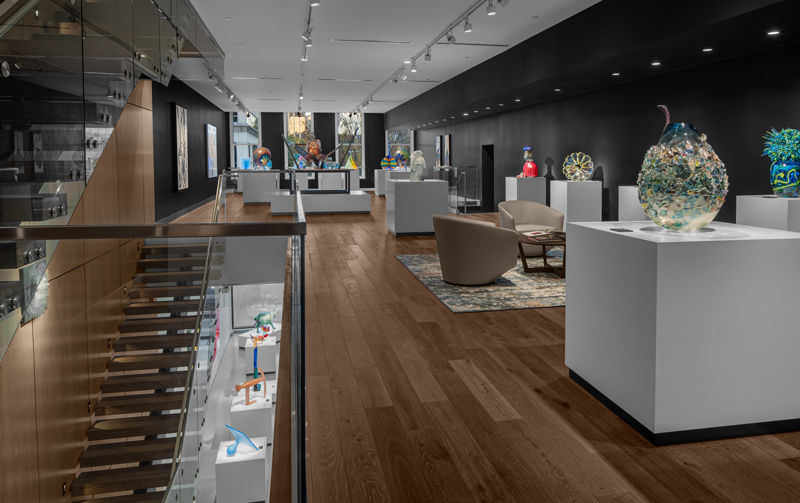
Neuroarchitecture crystallizes a fundamental insight: buildings are not neutral containers but active participants in human experience. Every design decision wall placement, window dimension, material specification, lighting configuration initiates neural cascades affecting occupants’ thoughts, emotions, and physiological states throughout their lifetimes within built environments.
The field’s maturation from curiosity to discipline reflects broader recognition that human flourishing requires environmental support. We cannot think independently of where we think. We cannot recover independently of where we recover. We cannot connect meaningfully with others independently of the spaces that bring us together.
Neuroarchitecture ultimately transcends technical optimization to address existential questions about human habitat. As our species spends increasing time within constructed environments, understanding how those environments shape us becomes essential self-knowledge. The brain meets modern design not as transient trend but as permanent evolution in architectural consciousness recognition that every building is a brain builder, for better or worse.
The most profound contribution of neuroarchitecture may be reinstating wonder at architecture’s power. When we understand that vaulted ceilings truly elevate thought, that daylight genuinely heals, that gardens authentically restore, we recover ancient knowledge validated by contemporary science. Good design is not merely visual preference but neurological necessity. This understanding transforms architectural practice from stylistic exercise to human development discipline design as medicine, design as education, design as civilization’s self-portrait in space.